The 10 Most Common Poker Mistakes Beginners Make
The 10 Most Common Poker Mistakes Beginners Make
The fastest way to improve as a new player is not to memorize every solver output. It is to remove the Poker Mistakes that cost you chips in the same simple spots over and over: loose preflop calls, bad position, weak bet sizing, emotional decisions, and unreviewed hands.
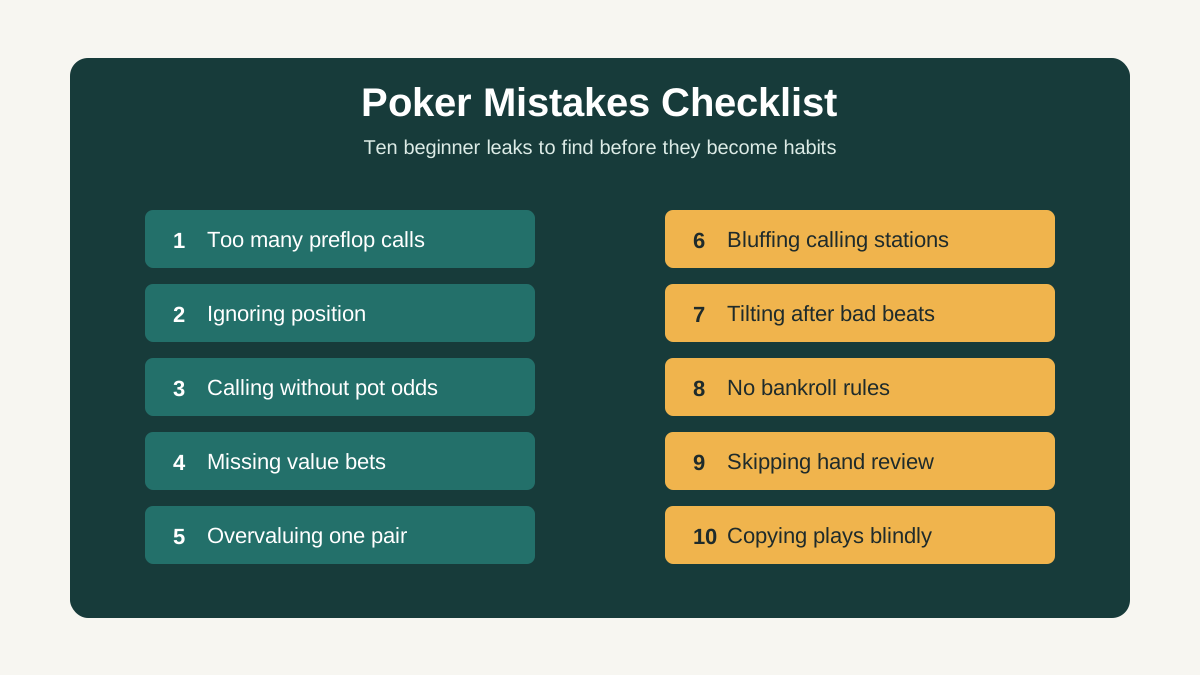
Most beginners lose money before the hard decisions even start. They enter too many pots, call raises with hands that do not realize equity well, and then arrive on the flop with no plan. The good news is that these leaks are visible. Once you know what to look for, you can fix them with repeatable rules and a short review routine.
This guide assumes no-limit Texas hold'em as the default, with examples that apply to both cash games and tournaments unless noted. The goal is not to make you robotic. The goal is to give you a cleaner baseline so you can see when an opponent is actually making a mistake instead of joining them.
Why Poker Mistakes Hurt Beginners So Much
Poker rewards small edges, but beginner mistakes often compound. A loose call before the flop becomes a difficult flop call. A difficult flop call becomes a river spot where you are guessing with one pair. By the time you lose the pot, the visible mistake is the river call, but the expensive decision may have happened three streets earlier.
That is why strong players talk so much about ranges, position, and bet sizing. Those ideas are not advanced decoration. They are the structure that keeps you out of weak, low-information spots. If you build better defaults, you need fewer heroic reads.
Beginners also underestimate how often a small leak repeats. Calling an extra 2.5 big blinds with K9 offsuit from early position does not feel dramatic. Do it hundreds of times, then add the postflop calls that follow, and it becomes a serious leak. The same pattern shows up with limping, chasing draws without the right price, and bluffing players who hate folding.
Use this article as a leak checklist. If one mistake sounds familiar, pick that leak for your next session. You do not need to fix all ten at once.
Poker Mistakes #1-3: Preflop Leaks That Start Bad Hands
1. Playing too many starting hands
The most common beginner leak is entering too many pots. Hands like Q8 offsuit, J7 suited, A4 offsuit, and K9 offsuit look playable because they can make pairs. The problem is that they often make dominated pairs. When you hit top pair with K9 and a tighter opponent has AK or KQ, you can lose a much bigger pot than you expected.
Your first fix is simple: play fewer hands from early position and widen gradually as you get closer to the button. Early position should be tight because several players still act behind you. Late position can be wider because you have more information and are more likely to act last after the flop.
A practical beginner rule: if you are unsure whether a hand is profitable from under the gun, fold it. Save the borderline opens for the cutoff, button, and small blind situations where you have a clear plan.
2. Limping instead of raising or folding
Open-limping feels cheap, but it creates messy pots. You give the blinds a discount, invite multiple opponents, and hide nothing about your range except that it is probably weak. When someone raises behind you, you are forced into a call-or-fold decision with a hand that was not strong enough to raise.
Beginners often limp small pairs, suited connectors, and weak broadways because they want to "see a flop." That mindset is expensive. Poker is not about seeing flops; it is about entering pots with initiative, position, equity, or a clear implied-odds reason.
Default to raise or fold when you are first in. If your hand is not strong enough to raise from that seat, it usually belongs in the muck. There are table-specific exceptions in passive live games, but you should learn the disciplined default first.
3. Ignoring position
Position changes everything. Acting last gives you more information, lets you control pot size, and helps your bluffs and value bets perform better. Acting first forces you to reveal your decision before your opponent reveals theirs.
New players often use the same starting-hand standards from every seat. They open A9 offsuit under the gun, call raises from the small blind, and defend hands out of position because they are "suited." The result is predictable: they spend the rest of the hand guessing.
Try this quick test before entering a pot: "Will I have position after the flop?" If the answer is no, tighten up. Calling from the small blind is especially dangerous because you will usually be out of position for the entire hand. [INTERNAL: poker positions beginner guide]
Poker Mistakes #4-6: Postflop Errors That Inflate Pots
4. Overvaluing one-pair hands
Top pair is a good hand, but it is not a license to stack off. Beginners often treat top pair top kicker as a monster on every board. The texture matters. Top pair on K72 rainbow is very different from top pair on KJT with two hearts.
Ask what worse hands can call and what better hands can raise. If you bet AK on KJ9 and get raised by a tight player, you are probably facing strong made hands and high-equity draws. If you bet AK on K72 and get called, many worse kings and pocket pairs can still continue.
One-pair hands usually want value and protection, not blind commitment. Build pots when worse hands can call. Slow down when the board, action, and opponent type tell you that your pair has become a medium-strength hand.
5. Chasing draws without counting the price
Draws are exciting because they can become big hands. They are also a common way for beginners to burn chips. Calling any bet with a flush draw or straight draw is not strategy. You need to compare the price you are getting with how often you expect to improve.
Here is a simple example. The pot is $40 and your opponent bets $20. You must call $20 to win $60, so you need about 25% equity before considering future action. A naked flush draw on the flop usually has around nine outs, which is often close enough against a normal bet, but not against a huge overbet with poor implied odds.
This does not mean you should fold every draw. It means you should stop saying "I had to call because I had outs." Count the bet, pot, likely outs, and future risk. [INTERNAL: poker pot odds guide]
6. Using bet sizes that do not match the goal
Bet sizing should answer a question: what do you want the bet to accomplish? Small bets can deny equity or get called by wide ranges. Larger bets can pressure capped ranges, charge draws, and build value with strong hands. Random bets do none of those things reliably.
Beginners often bet tiny when they are strong because they fear a fold, then bet huge when they are bluffing because they desperately want a fold. Observant opponents notice. Against calling stations, this pattern loses value with strong hands and wastes money with weak hands.
Use a simple default. On dry boards where you have a range advantage, a smaller continuation bet can work. On wet boards where many draws can continue, size up with value hands and strong semi-bluffs. You do not need solver-perfect sizing yet; you need sizing with a purpose.
Poker Mistakes #7-8: Aggression Problems Beginners Misread
7. Bluffing the wrong players
Bluffing is part of poker, but beginner bluffs often target the worst opponents. If a player calls too much, stop trying to make them fold top pair. Your adjustment is to value bet thinner, not to fire bigger bluffs.
A good bluff needs fold equity. That means your opponent must be capable of folding, and your line must represent credible strong hands. If you call preflop, call the flop, and suddenly overbet the river on a blank card, your story may not make sense. If you raised preflop, bet a high-card flop, and barrel a scare card that improves your range, the bluff is more believable.
Before bluffing, ask two questions: "What better hands am I trying to fold?" and "Does this opponent fold those hands?" If you cannot answer both, check or give up more often.
8. Missing value bets
Beginners often think poker is won by catching bluffs. In many low-stakes games, more money is made by betting when worse hands will call. If your opponent calls too wide, you should punish that leak with value.
Thin value is uncomfortable at first because your hand is not always a monster. Suppose you raise AQ, the big blind calls, and the board runs Q74-2-9. Against a loose caller, a river bet can get paid by QJ, QT, missed draws that hero-call, and stubborn pairs. Checking behind may feel safe, but it leaves money behind.
The key is to identify the worse hands that can call. If there are enough of them, bet. If only better hands continue, check. This one habit immediately separates a practical winning approach from passive "showdown poker."
Poker Mistakes #9-10: Mental Game And Study Leaks
9. Letting tilt make the next decision
Tilt is not only yelling after a bad beat. It can be impatience, revenge calling, boredom, fear, or the urge to win back chips immediately. Beginners often change their standards after losing a pot. They call wider, bluff more, or move up in stakes to recover.
You need a stop-loss and a reset routine before the session starts. For example: if you lose three buy-ins in a cash game, quit or take a real break. If you make two clearly emotional decisions, sit out for one orbit. If you are playing a tournament, use the break to review stack depth and opening ranges instead of replaying the bad beat.
The point is not to eliminate emotion. The point is to stop emotion from writing your next action.
10. Playing without a bankroll or review plan
Bankroll mistakes are quiet because they do not always happen in a hand. A beginner might play too big, lose two normal all-ins, and then feel forced into scared money decisions. Even if the strategy was fine, the bankroll setup made the session emotionally fragile.
Set a stake where losing a buy-in does not change your life or your decision-making. For online cash games, many players use conservative bankroll rules such as keeping dozens of buy-ins for their stake. Tournaments require even more cushion because variance is higher. The exact number depends on format, win rate, and risk tolerance, so treat any rule of thumb as a starting point for review.
You also need a hand-review habit. After each session, mark three hands: one big lost pot, one big won pot, and one confusing medium pot. Review the preflop decision first, then position, pot odds, bet sizing, and opponent type. [INTERNAL: hand history review process]
How To Fix These Poker Mistakes In Your Next Session
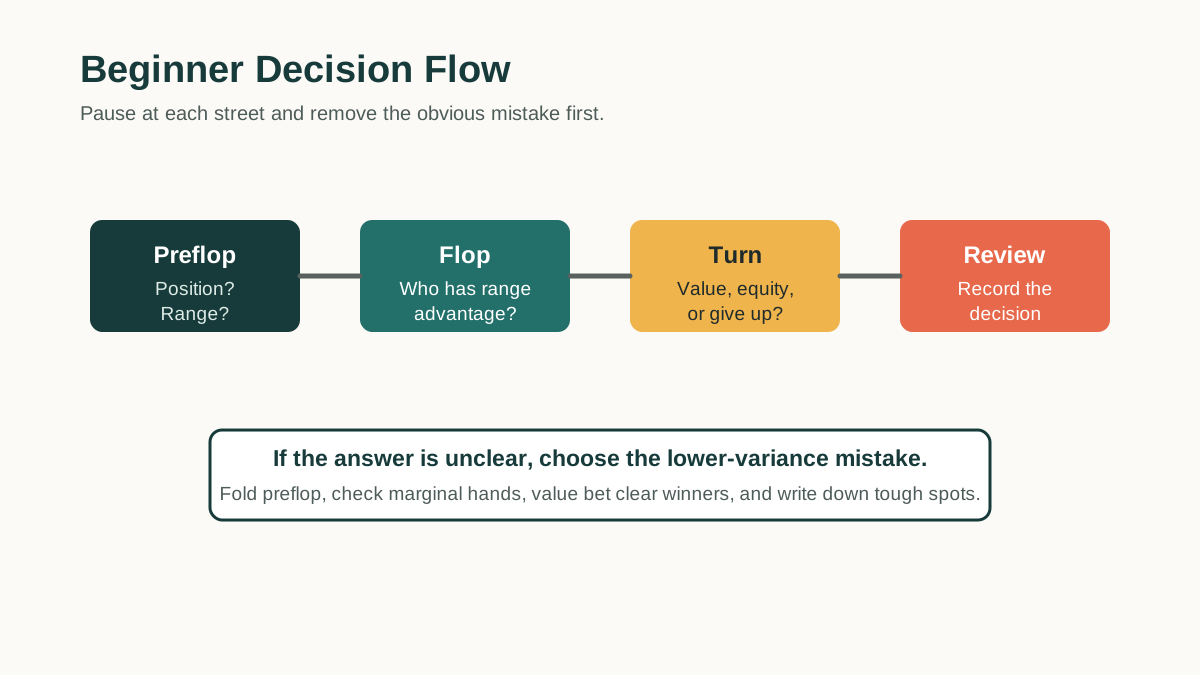
Do not try to become perfect overnight. Pick one measurable leak and track it for one session. If you are too loose preflop, write down your opening ranges by position before you play. If you chase draws, calculate pot odds in every draw spot, even when the decision seems obvious. If you miss value, pause on the river and name three worse hands that can call before you check back.
A simple session checklist works well:
- Before the session: choose one leak to focus on.
- During the session: mark hands where that leak appeared.
- After the session: review three marked hands and write one adjustment.
- Next session: repeat the adjustment until it becomes automatic.
This is where solver-aware study helps, even for beginners. You do not need to copy a solver line exactly. You can use training tools to see the shape of a strong range: which hands raise, which hands call, which hands bluff, and which hands give up. The learning comes from comparing your instincts to a better baseline.
The best beginner improvement plan is boring in the right way. Fold the worst hands. Raise instead of limp. Respect position. Value bet opponents who call too much. Bluff players who can fold. Review hands when you are calm.
Take Action Now
If you want to cut your biggest Poker Mistakes, start with the leak that appears most often, not the one that feels most dramatic. For many beginners, that means tightening preflop by position, removing open-limps, and reviewing every big pot where one pair got too expensive.
Level X Poker is built around turning those repeat spots into cleaner decisions. Use this checklist before your next session, mark the hands that expose your leak, and make your next study block about one fix you can actually measure.
Frequently Asked Questions
What is the biggest poker mistake beginners make?
The biggest mistake is usually playing too many hands before the flop. Loose preflop choices create dominated pairs, weak draws, and out-of-position guessing games. Tightening your starting range by position fixes many later problems.
Are Poker Mistakes mostly preflop or postflop?
They happen in both places, but preflop mistakes are easier to repeat and harder to notice. If you enter the pot with a weak hand from bad position, even good postflop instincts may not save the hand.
Should beginners bluff less?
Most beginners should bluff more selectively, not never. Bluff players who can fold, choose boards that favor your range, and use lines that tell a believable story. Against players who call too much, shift toward value betting.
How do I know if I am chasing draws too often?
Review hands where you called flop or turn bets with draws and missed. Write down the pot size, bet size, estimated outs, and whether you had implied odds. If you cannot explain the price, the call was probably emotional or automatic.
What should I study first as a new poker player?
Start with position, starting-hand selection, pot odds, and value betting. Those fundamentals show up constantly and make later topics like bluffing, range reading, and solver study much easier to understand.