Poker Positions Explained: Why Button, Cutoff, and Blinds Matter So Much
Poker Positions Explained: Why Button, Cutoff, and Blinds Matter So Much
Poker Positions decide how much information you get before putting money in the pot. The same hand can be profitable on the button, marginal in the cutoff, and a clear fold from under the gun because the players left to act change everything. If you are new to poker, learning position is one of the fastest ways to stop guessing and start making decisions with a clear reason.
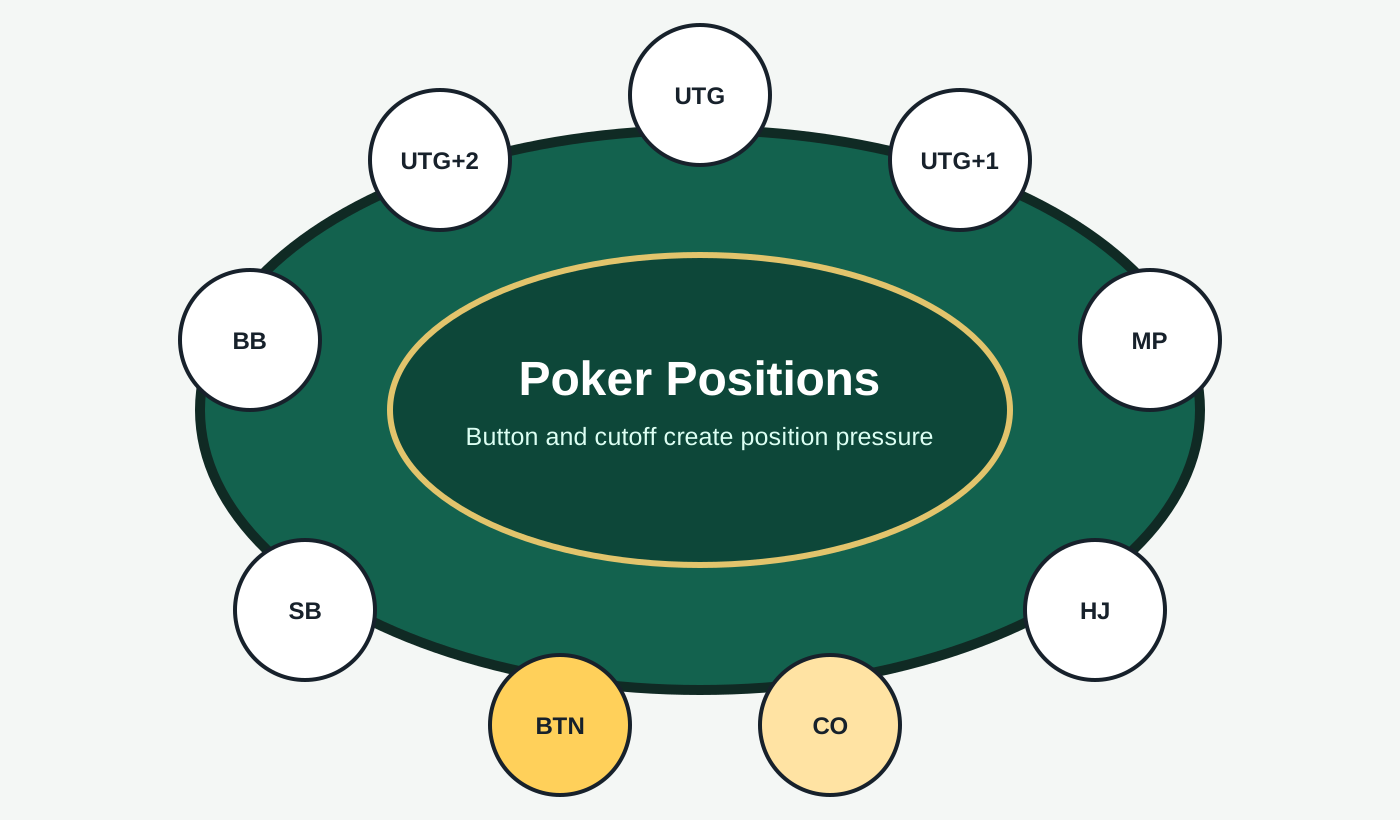
Why Poker Positions Matter Before the Flop
Position is your seat relative to the dealer button. In No-Limit Hold'em, the button moves one seat clockwise after each hand. The small blind and big blind post forced bets, then action begins before the flop with the player to the left of the big blind.
The key idea is simple: the earlier you act, the less information you have. Under the gun acts first before the flop at a full-ring table, with every player still waiting behind. The cutoff acts late, with only the button and blinds still to respond. The button acts last before the blinds, then usually acts last on every postflop street.
That order changes your profitable starting hands. A hand like KJo can look playable when you are new because it has two broadway cards. From early position, however, you still have many players who can wake up with AQ, AK, or a pocket pair. From the button, the same hand becomes more attractive because fewer players can punish you and you will often play the rest of the hand in position.
Think of position as a discount on uncertainty. Late position does not make weak hands magically strong, but it lets you see more folds, raises, calls, bet sizes, and timing before choosing your action. That extra information is why good players open more hands as they get closer to the button and defend the blinds carefully instead of automatically.
For a basic position-name refresher, PokerStars has beginner-facing explainers on what position means and how common seats such as under the gun, cutoff, button, and blinds are named. Upswing also has a useful overview of the button and blind mechanics. Those sources agree on the same practical lesson: your seat changes your risk, your information, and your hand value.
The Table Map: Early, Middle, Late, and Blinds
A nine-handed table usually breaks down like this:
| Group | Seats | Beginner meaning |
|---|---|---|
| Early position | UTG, UTG+1, UTG+2 | Play tight because almost everyone acts after you. |
| Middle position | LJ, HJ | You can open more hands, but still respect late-position players. |
| Late position | CO, BTN | You have the best steal chances and the most postflop information. |
| Blinds | SB, BB | You post forced money and often play out of position. |
Six-max tables compress the same idea. There may be no UTG+1 or UTG+2, but the logic remains: early seats need stronger hands, late seats can pressure more often, and blinds must avoid bleeding chips with loose calls.
Early Position
Early position is where beginners get punished for impatience. When you open from under the gun, you are representing strength because you chose to enter the pot before seeing what almost the entire table would do. If you open too many hands here, you create two problems.
First, you get 3-bet by stronger ranges. Second, when players call, you often go postflop with weaker holdings and worse position. A hand like ATo may feel solid, but from early position it can run into dominated aces and strong broadway hands. A simple beginner adjustment is to open pairs, strong suited broadways, big offsuit broadways, and strong suited aces first, then widen only after you understand the table.
Middle Position
Middle position gives you more freedom, but it is not late position. You have seen a few players fold, which makes stealing more realistic. You still have the hijack, cutoff, button, small blind, and big blind behind you, so loose opens can be punished.
Use middle position to introduce controlled widening. Hands like A9s, KTs, QJs, 66, and suited connectors can become opens depending on stack depth, rake, and table behavior. The mistake is treating middle position like the button just because a few early seats folded.
Late Position
Late position is where poker opens up. The cutoff and button can attack blinds, isolate limpers, and apply pressure because the strongest early-position ranges have already folded. When everyone folds to you in the cutoff, only three players remain. When everyone folds to you on the button, only the blinds remain.
That does not mean you should raise any two cards. It means hands with playable features become more profitable: suited aces, suited kings, broadways, suited connectors, small pairs, and some offsuit broadways. Your edge comes from combining fold equity before the flop with better postflop information after the flop.
Poker Positions and the Button: The Best Seat at the Table
The button is the most valuable regular poker position because it acts last after the flop. Acting last lets you check behind when you want pot control, bet when opponents show weakness, call with more confidence, and raise with a clearer picture of the action.
Suppose you raise A9s on the button and the big blind calls. The flop is K72 rainbow. If the big blind checks, you can continuation bet small and win immediately at a high frequency against many beginner pools. If the big blind bets, you can fold without investing extra chips. If the turn checks through after your flop bet gets called, you can decide whether the river card favors your range or theirs.
Now compare that with opening A9s from early position and getting called by the button. On the same K72 board, you act first. If you bet, the button can call, raise, or float with full information. If you check, the button can take a free card or bet and force you to defend without knowing what comes next.
That is the button advantage. It does not require fancy theory. You simply get to make the last decision on every postflop street, and last decision usually means better decision.
Button Steals
A button steal is a raise after everyone folds to you on the button. The goal is not only to win the blinds. You also create a profitable heads-up pot against a blind who will often be out of position.
Begin with a reasonable opening size for your game, often around 2 to 2.5 big blinds online and larger in many live games where players call too much. If the blinds overfold, steal wider. If the blinds call too wide, open hands that realize equity well and value bet them postflop. If a blind 3-bets aggressively, tighten the weakest opens and prepare a few hands that can 4-bet or call.
Poker Positions in the Cutoff: Power Without Full Safety
The cutoff is the seat to the right of the button. It is powerful because you can steal blinds, isolate weaker players, and often play in position against the blinds. The difference is that the button is still behind you.
That one player matters. If you open too wide from the cutoff, a good button can call in position, 3-bet, or pressure you postflop. The cutoff is a money-making seat, but it is not a license to ignore the button.
Here is a common example. You hold Q9s in the cutoff at 100 big blinds. Everyone folds to you. Against tight blinds and a passive button, raising can be profitable. Against a strong button who 3-bets frequently, the same hand may become a fold or a lower-frequency open. The cards did not change. The players behind you changed.
The cutoff teaches the most important beginner lesson about late position: late does not mean automatic. You still ask who can act after you, how often they defend, and whether your hand plays well when called.
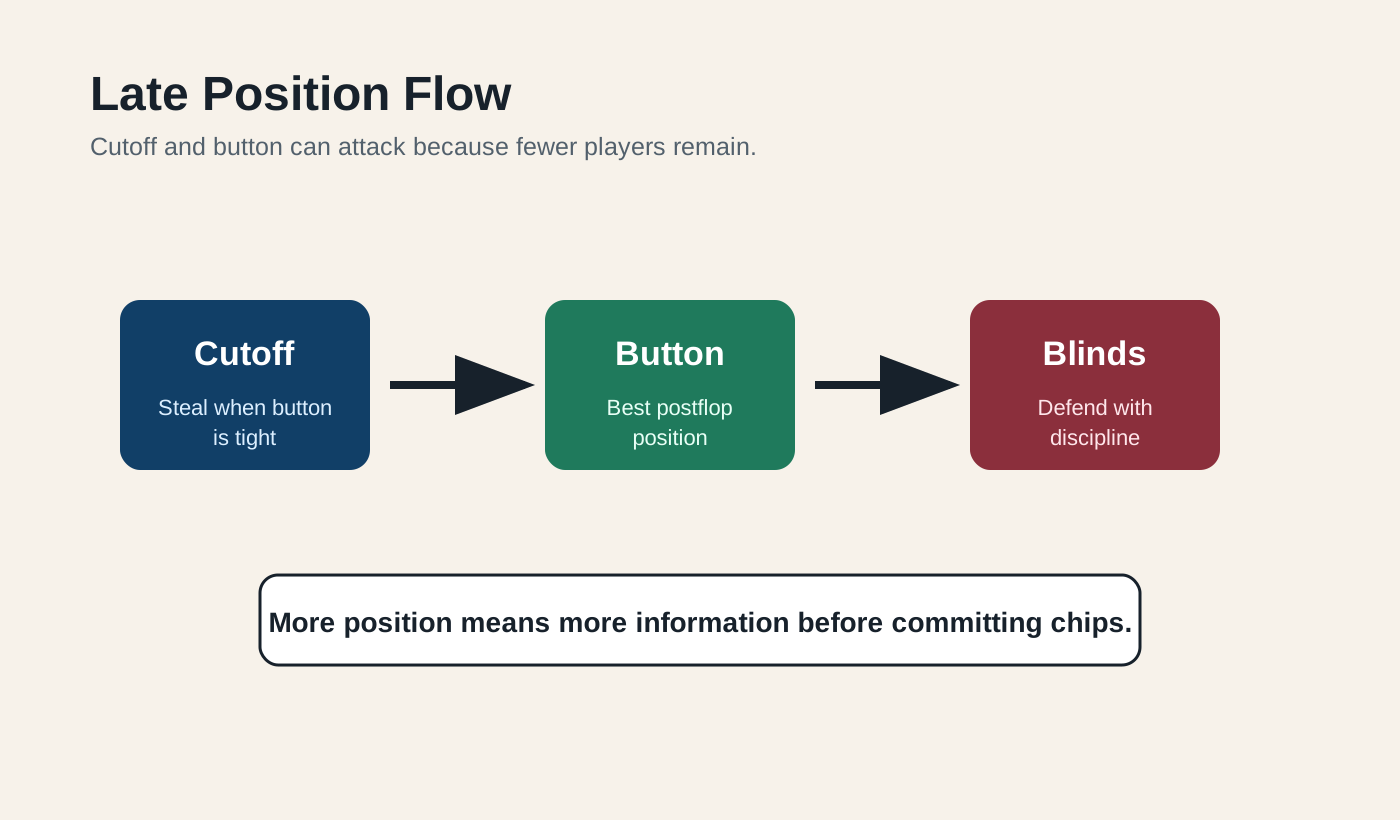
Cutoff vs Button Difference
The cutoff often gets confused with the button because both are late positions. The practical difference is postflop leverage. If the button folds and a blind calls, the cutoff usually has position. If the button calls, the cutoff is now out of position against the one player with the best seat.
That is why many preflop charts open wider from the button than the cutoff. A beginner does not need to memorize every combo on day one. You only need the pattern: cutoff is aggressive, button is more aggressive, and the gap between them exists because position has value.
The Blinds: Forced Money, Hard Decisions
The small blind and big blind are strange positions because you put money in before seeing your cards. That discount tempts beginners into defending too many hands. "I already have chips in" is not a complete reason to continue.
The small blind is especially difficult. You have a partial blind invested, but you will usually act first after the flop if the big blind is not the only opponent. Calling too much from the small blind creates bloated pots from the worst seat. A cleaner beginner strategy is to 3-bet or fold more often against late-position opens, then call only with hands that clearly perform well in your game.
The big blind gets the best price preflop because it has already posted a full blind. That means you can defend more often than the small blind, especially against small button opens. But the big blind still plays out of position after the flop against every non-blind opener. A hand can be priced in and still difficult.
For example, the button raises to 2.2 big blinds and you have J7s in the big blind. You are getting a tempting price. Against a wide button, calling may be reasonable. Against a tight player who only opens strong hands, it becomes worse. Against a larger live open to 5 big blinds, it may become a fold. Position, price, player type, and hand playability all matter together.
Blind Defense Checklist
Before defending a blind, ask four questions:
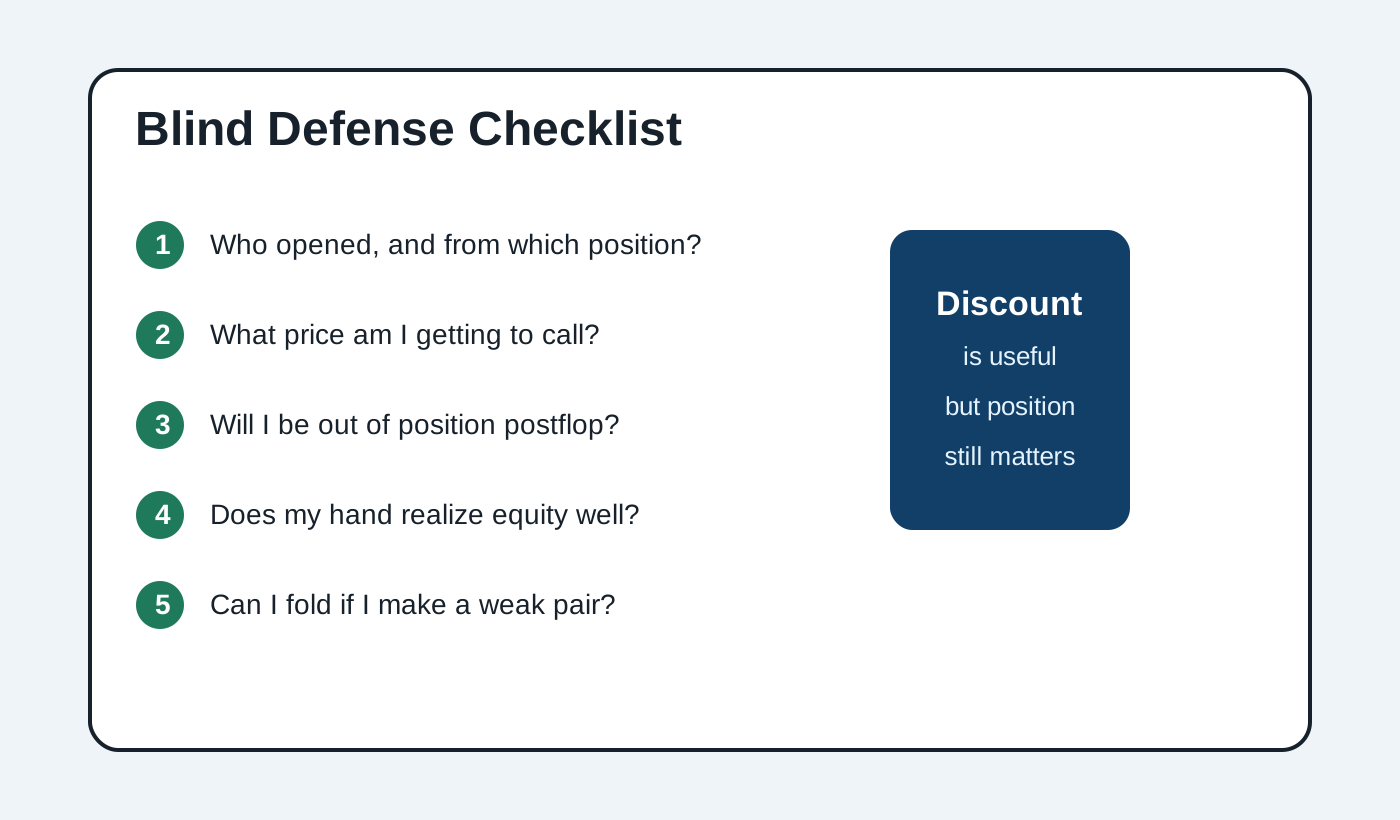
- How large is the raise?
- How wide is the opener from that position?
- Will I be heads-up or multiway?
- Does my hand make strong pairs, strong draws, or mostly weak pairs?
This checklist prevents the most common blind leak: calling because you feel invested instead of calling because the situation is profitable.
Why Poker Positions Change Postflop Strategy
Preflop ranges are only half the story. Poker Positions matter even more after the flop because each betting round gives the in-position player one more chance to react.
When you are in position, you can take free cards with draws, value bet thinner after opponents check, and bluff more credibly when their ranges look capped. When you are out of position, you must often reveal information first. Checking may signal weakness. Betting may face a raise. Calling can leave you guessing on the next street.
Consider this hand: you raise KQs from the cutoff and the big blind calls. The flop is Q84 with two clubs. The big blind checks. You have top pair and a strong kicker. In position, you can bet for value and protection. If called, you see the turn action before deciding whether to bet again.
Now imagine you call from the big blind with KQs against a cutoff raise and see the same flop. You check, the cutoff bets, and you must decide immediately. Your hand is still strong, but you are now responding instead of steering. On later streets, you will often keep checking first and the cutoff keeps choosing whether to build the pot or control it.
This is why poker coaches talk about "realizing equity." Hands realize their equity better when they can see what opponents do first. Position helps made hands extract value, draws choose good prices, and marginal hands avoid unnecessary bets.
Common Beginner Mistakes With Poker Positions
Most position leaks are not dramatic. They are small, repeated decisions that quietly cost money.
The first leak is opening the same hands from every seat. If you raise KTo, QJo, A7o, and small suited gappers from under the gun because they look playable, you will spend too much time dominated or out of position. Fix this by using a simple opening chart as a baseline and widening only in later seats.
The second leak is calling too much in the small blind. Completing or flat-calling feels cheap, but the postflop cost is high. You often invite the big blind into the pot, create multiway spots, and act first. When in doubt, make the small blind your tightest seat.
The third leak is defending the big blind without a plan. Good pot odds do not mean every suited hand prints money. If you call with weak offsuit hands, reverse implied odds can hurt you when you flop a dominated pair.
The fourth leak is ignoring who is behind you. The cutoff is profitable partly because the button sometimes folds. If the button is aggressive and paying attention, your cutoff range should tighten. If the button is tight and the blinds overfold, your cutoff can attack more.
The fifth leak is thinking position stops mattering after preflop. Many beginners correctly learn to open wider on the button but then continuation bet every flop without reading ranges. Position gives options. You still need to use those options thoughtfully.
A Simple Study Routine for Poker Positions
You can improve position play quickly with a short review routine.
First, review your VPIP and PFR by position if you use tracking software. You should usually see early position as tight, middle position wider, cutoff wider again, and button widest. The blinds will show more calls because of forced bets, but they should not be uncontrolled.
Second, mark hands where you lost medium pots from the blinds. Ask whether the preflop defend was necessary, whether the raise size changed the math, and whether your hand had enough playability. Many beginner leaks show up as "reasonable" calls that become awkward turn and river decisions.
Third, review late-position steals. Filter for cutoff and button opens when everyone folded to you. Are you missing profitable steals because you only raise premium hands? Or are you opening hands that cannot handle calls or 3-bets? Both errors are common.
Fourth, compare one hand in position and one similar hand out of position. Notice how often the in-position hand gets a clearer river decision. This exercise makes the concept practical instead of theoretical.
For deeper work, connect this topic to [INTERNAL: beginner preflop ranges], [INTERNAL: blind defense strategy], and [INTERNAL: continuation betting basics].
Take Action Now
The next time you play, do not start with a complicated solver chart. Start with one rule: before every voluntary preflop action, name your position out loud in your head. "I am under the gun." "I am in the cutoff." "I am on the button." "I am in the big blind." Then ask whether your hand still makes sense from that seat.
Poker Positions are not trivia. They are the structure that tells you when to tighten up, when to attack, when to defend, and when to let a tempting hand go. Master button, cutoff, and blind decisions first, and the rest of your beginner strategy becomes much easier to organize.
Frequently Asked Questions
What are the most important Poker Positions for beginners?
The button, cutoff, small blind, and big blind deserve the most attention first. The button and cutoff are your main attacking seats. The blinds are your most common defensive seats and the easiest places to lose chips with loose calls.
Why is the button better than the cutoff?
The button acts after every other player postflop in standard Hold'em hands. The cutoff is strong, but the button can still call or 3-bet behind you before the flop and can have position on you after the flop.
Should I play tighter in the blinds?
Play especially tight in the small blind, where calling creates many out-of-position pots. The big blind can defend more often because of the price, but you still need to adjust for raise size, opener position, and hand playability.
Do Poker Positions matter in tournaments and cash games?
Yes. The exact ranges change because stack depth, antes, rake, and ICM pressure change incentives, but the core idea remains: acting later gives more information, and acting earlier requires stronger hands.
Can I learn position without memorizing charts?
Yes. Charts help, but start with the pattern. Early position is tight, middle position is controlled, cutoff is aggressive, button is widest, small blind is cautious, and big blind defends based on price and opponent range.