Poker Cheat Sheet: Odds, Outs, Positions, and Starting Hands in One Guide
Poker Cheat Sheet: Odds, Outs, Positions, and Starting Hands in One Guide
A good Poker Cheat Sheet should do one thing: help you make cleaner decisions before the hand gets expensive. You do not need to memorize every solver chart to start playing better. You need to know which hands are worth entering, how your seat changes their value, how to count outs, and when the price of a call is good enough.
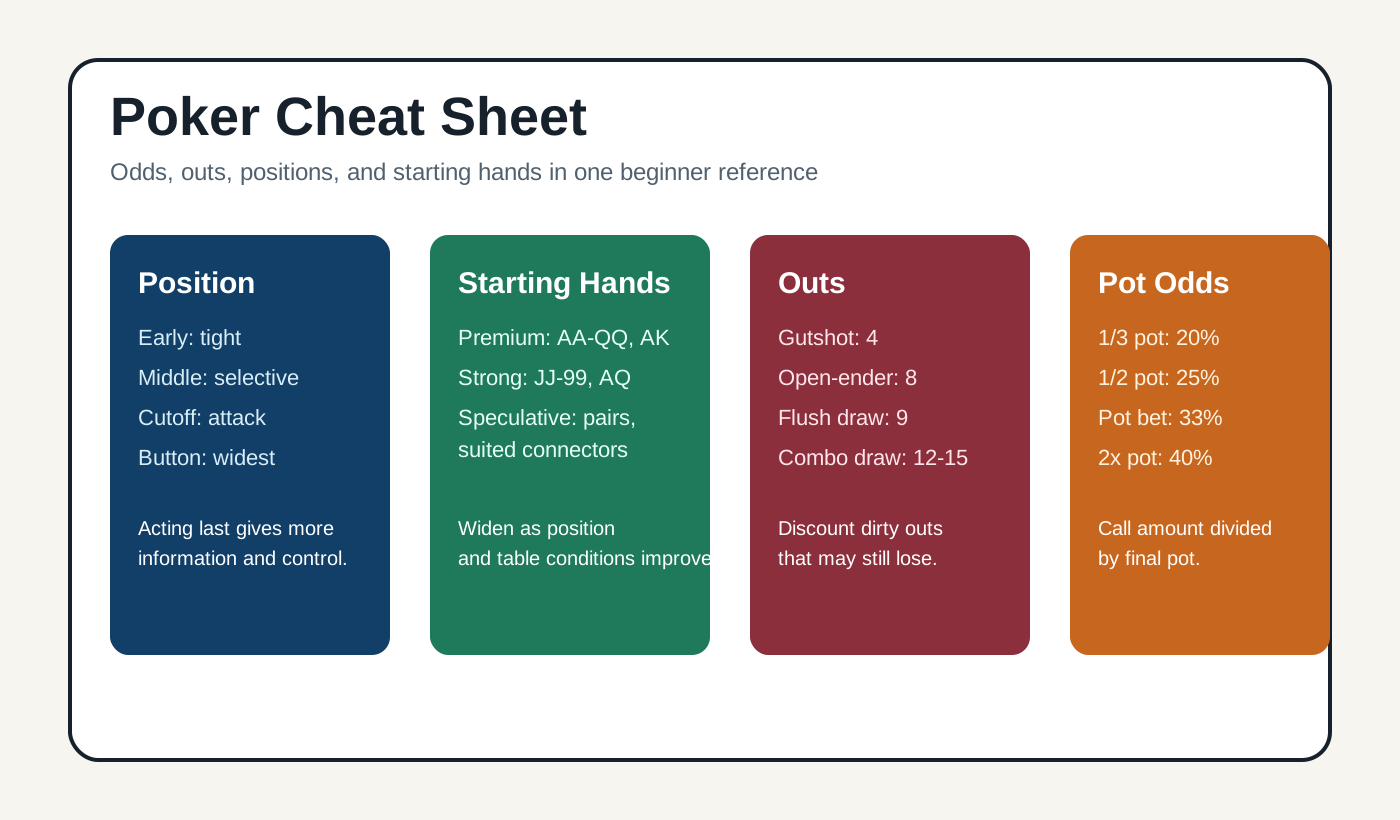
This guide is built for no-limit Texas hold'em beginners who want one practical reference. It covers hand rankings, table positions, starting hands, pot odds, outs, common draw math, and simple decision rules you can use during study or before a session. Treat it as a starting point, not a rigid script. Stack depth, rake, table type, and opponent tendencies always matter.
The examples mostly assume 6-max or full-ring cash games around 100 big blinds deep. If you play short-stack tournaments, live loose-passive games, or very aggressive online pools, keep the same fundamentals but tighten or loosen the edges based on the situation.
How to Use This Poker Cheat Sheet
The biggest mistake beginners make with a cheat sheet is using it as a permission slip. A chart that says "open A9 suited on the button" does not mean you must raise A9 suited into two calling stations in the blinds when you are tilted and unsure postflop. A cheat sheet gives you a default. Your job is to notice when the hand, seat, stack, and opponents make that default better or worse.
Use this guide in three passes.
First, learn the fixed facts: hand rankings, position names, common outs, and rough draw odds. These do not change much from table to table. A flush still beats a straight, a gutshot still usually has four clean outs, and acting last is still valuable.
Second, learn the default strategy rules. Open tighter from early position. Open wider from the cutoff and button. Raise first in instead of limping. Count the pot before you call a draw. Fold more dominated offsuit hands.
Third, learn the adjustment layer. If the blinds fold too much, steal more. If they call too much, value bet more and bluff less. If a player 3-bets only premium hands, stop defending marginal hands just because a chart says they can continue in theory.
PokerStars' beginner material makes the same broad point about starting hands: your hole cards matter before the flop, but position changes how playable those cards become. GTO Wizard's preflop range work adds the solver-aware version: first-in opening ranges are usually linear, meaning they start with the best hands and move downward until the weakest profitable hands are reached.
[INTERNAL: beginner poker rules and hand rankings]
Poker Hand Rankings Quick Reference
Before odds, outs, or starting hands matter, you need to know what wins at showdown. Texas hold'em uses five-card poker hands. You can use both hole cards, one hole card, or no hole cards if the board itself makes the best hand.
From strongest to weakest, the standard hand rankings are:
| Rank | Hand | Simple example |
|---|---|---|
| 1 | Royal flush | A-K-Q-J-T all same suit |
| 2 | Straight flush | 9-8-7-6-5 all same suit |
| 3 | Four of a kind | Four queens |
| 4 | Full house | Three kings and two tens |
| 5 | Flush | Five cards same suit |
| 6 | Straight | Five connected ranks |
| 7 | Three of a kind | Three sevens |
| 8 | Two pair | Aces and fours |
| 9 | One pair | Two jacks |
| 10 | High card | Ace high |
PokerStars' hand ranking guide is a useful source for confirming the exact order and tie rules. The most common beginner confusion comes from straights, flushes, and kickers.
A flush beats a straight because flushes are rarer. A full house beats a flush. If two players both have one pair, two pair, trips, or high card, the unused cards that complete the best five-card hand can break the tie. Those cards are called kickers.
Example: you hold Ah-Qc and your opponent holds Ah-Jd. The board is A-8-5-2-K. Both players have one pair of aces. Your Q kicker beats the J kicker, so you win.
Now change the board to A-K-Q-J-T. Everyone still in the pot plays the board for a straight. Your hole cards do not improve the five-card hand, so the pot is split.
Showdown Rule
Always build the best five-card hand, not the best seven-card hand. If the board is K-K-K-7-7 and you hold A-Q, you have a full house, kings full of sevens. Your ace is irrelevant because the five-card board already makes the hand.
Beginner Memory Rule
Pairs and two pair are common. Straights and flushes are strong but not invincible. Full houses and better are usually monster hands. When the board is paired or all one suit, slow down before assuming your made hand is automatically safe.
Poker Cheat Sheet for Positions
Position is where you sit relative to the dealer button and blinds. It controls how much information you get before acting. Late position lets you see what more players do before you make your preflop decision. In position postflop, you act after your opponent on the flop, turn, and river.
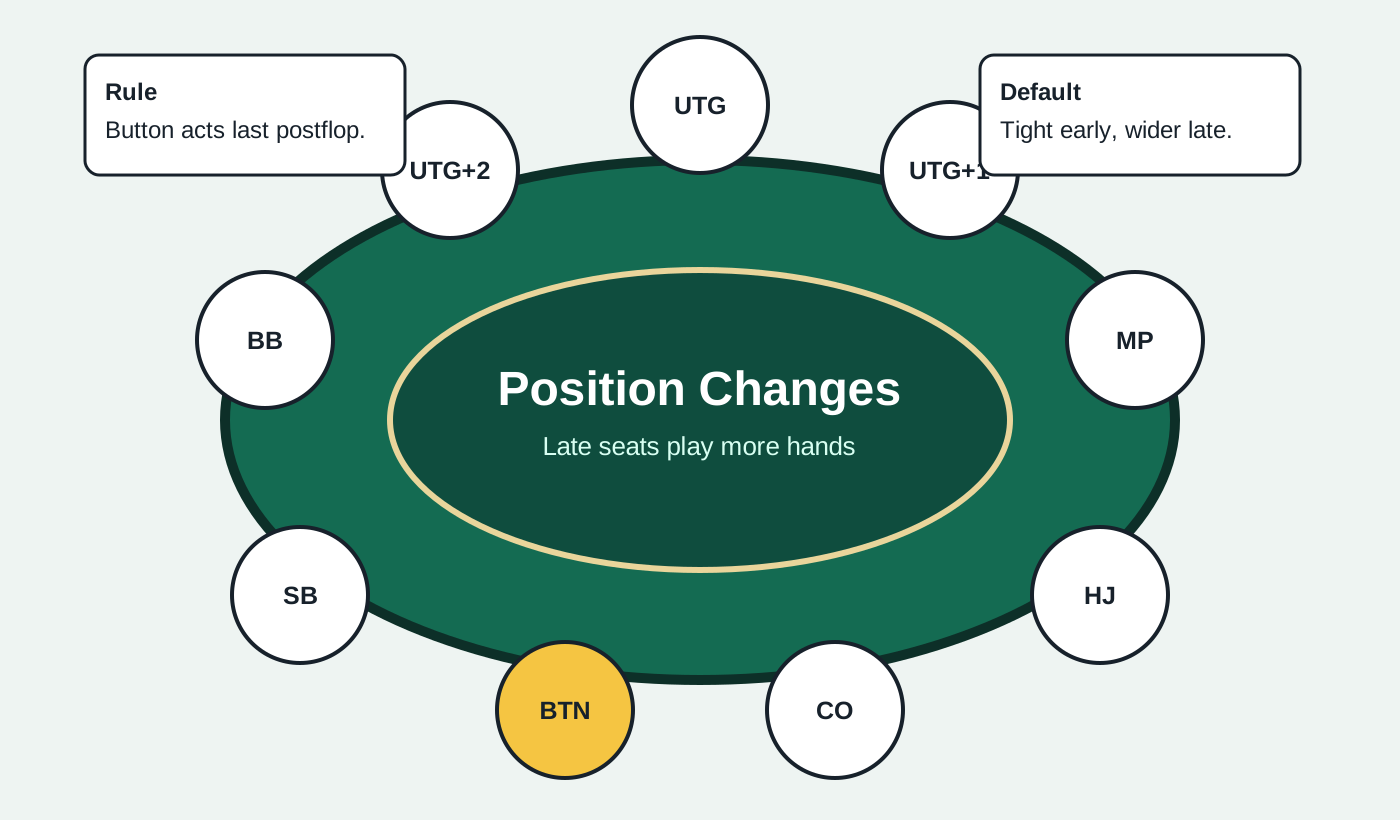
Here is the basic table map for a 9-handed game:
| Position group | Seats | Default style |
|---|---|---|
| Blinds | Small blind, big blind | Forced money, out of position postflop often |
| Early position | UTG, UTG+1 | Tightest opening ranges |
| Middle position | UTG+2, lojack | Still selective, more hands than early |
| Late position | Hijack, cutoff, button | Wider opens, more steals, more position |
In 6-max, the names compress. The first player to act preflop is often called UTG or lojack. Then comes hijack, cutoff, button, small blind, and big blind.
The button is the best seat because it acts last after the flop. The cutoff is next best because only the button can have position on you if you raise and get called. The blinds are tricky because you already have money invested, but you usually play the rest of the hand out of position.
This is why the same hand changes value by seat. KTo can be a fold under the gun, a possible open in the cutoff at some tables, and a standard open on the button when the blinds are not punishing you. The cards did not change. Your information and postflop control changed.
In Position vs Out of Position
You are in position when you act after your opponent postflop. You are out of position when you act first.
In position, you can value bet after checks, take free cards, control pot size, and see whether an opponent shows strength before you decide. Out of position, you often have to check and guess whether your opponent is betting for value, bluffing, or taking advantage of your capped range.
Use this simple rule: build bigger pots in position and avoid bloating marginal pots out of position. Top pair with a good kicker is easier to value bet on the button than from the big blind against a late-position raiser.
Starting Hands by Position
Starting hand charts are useful because they stop emotional decisions. You will get bored. You will see several weak hands in a row. You will want to "mix it up" with J7 suited from early position. The chart reminds you that weak hands are normal, not a reason to donate chips.
PokerCoaching's flopping odds article notes how rare premium hands are. Pocket aces appear about once every 220 hands, and any pocket pair appears about once every 17 hands. If you wait only for aces and kings, you will be too tight. If you play every suited hand because premiums feel rare, you will be too loose.
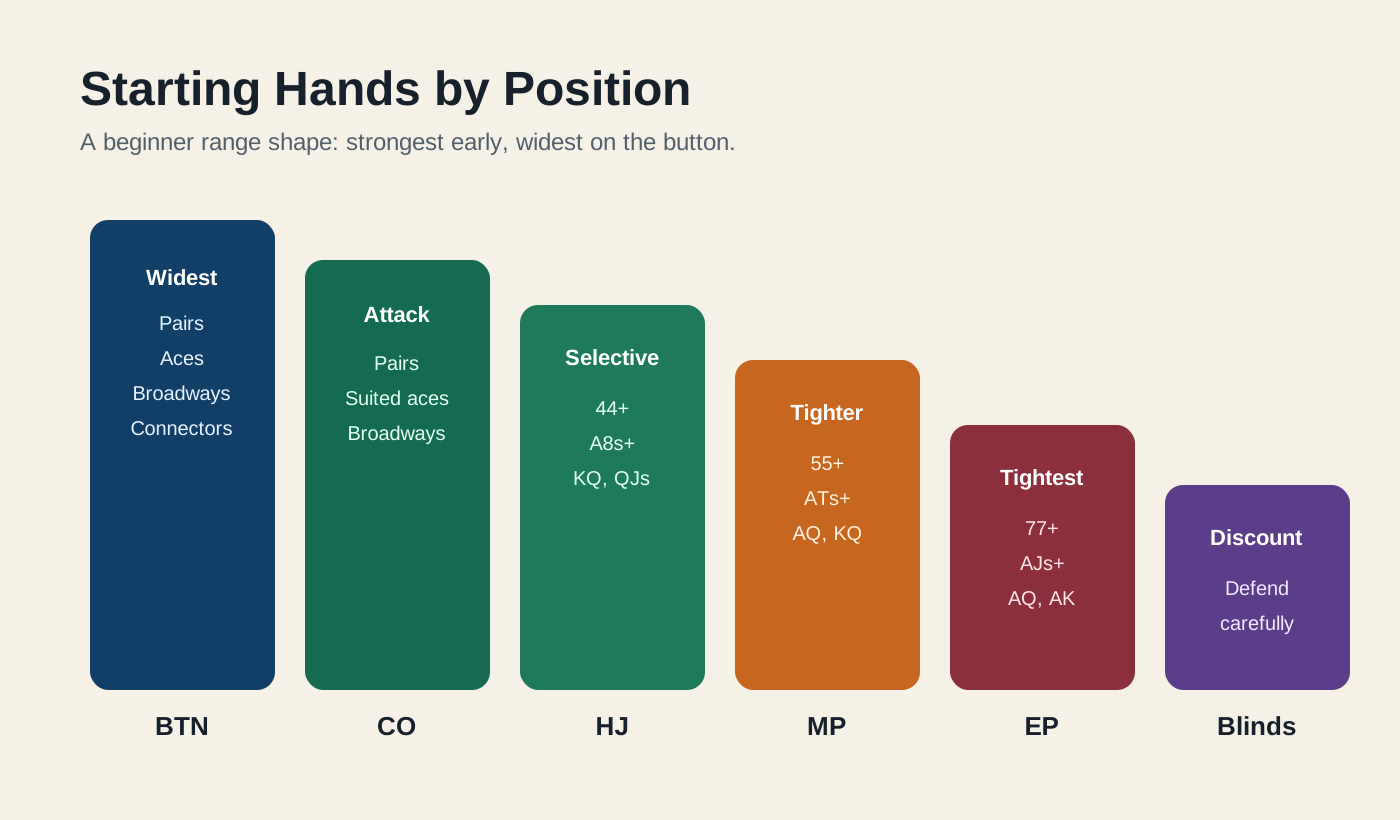
Here is a practical beginner baseline for raise-first-in spots, meaning everyone has folded to you and you are the first player voluntarily entering the pot.
| Seat | Beginner open range idea |
|---|---|
| Early position | 77+, AJs+, KQs, AQo+, sometimes ATs and KJs at softer tables |
| Middle position | 55+, ATs+, KJs+, QJs, JTs, AQo+, KQo |
| Hijack | 44+, A8s+, suited broadways, T9s, 98s, AJo+, KQo |
| Cutoff | 22+, most suited aces, broadways, suited connectors 76s+, some suited kings |
| Button | Any pair, most aces, many suited kings and queens, broadways, suited connectors, selected offsuit steals |
| Small blind | Raise a playable but disciplined range; avoid completing too many weak hands |
This is intentionally not a full 169-hand matrix. Beginners need a shape they can remember. Early position is strong and narrow. Middle position adds more pairs, suited aces, and suited broadways. Late position adds steals and more hands that benefit from position.
GTO Wizard's preflop range morphology article describes first-in opening ranges as linear: start with the most valuable hands and add weaker ones as the position improves. That is the key idea. You are not randomly mixing trash into early position. You are expanding the bottom of a value-driven range as your seat improves.
Premium Hands
Premium hands are AA, KK, QQ, JJ, AK suited, and AK offsuit. You should usually raise them and often 3-bet them. They make strong pairs, dominate worse high-card hands, and can win large pots.
Do not slowplay premiums preflop by limping just because you want action. Beginners make more money by building pots with strong hands and keeping decisions simple.
Strong but Not Invincible Hands
Hands like TT, 99, AQ, AJ suited, KQ suited, and KQ offsuit can be profitable, but they become more position-sensitive. AQ is strong on the button. AQ facing a tight 4-bet from an early-position player is a very different spot.
These hands often make one pair. One pair can win many pots, but it should not always play for stacks.
Speculative Hands
Small pairs, suited connectors, suited one-gappers, and low suited aces are speculative. They do not win often by making top pair. They win when they make sets, straights, flushes, strong draws, or profitable semi-bluffs.
Speculative hands need the right conditions: position, deep enough stacks, opponents who pay off, and reasonable preflop prices. Calling a large 3-bet out of position with 65 suited because it "can make a straight" is a common leak.
Hands to Avoid in a Beginner Poker Cheat Sheet
Some hands look playable because they contain face cards or suits, but they create dominated spots. Dominated means your opponent can have the same pair with a better kicker.
Avoid these hands from early and middle position:
- Weak offsuit aces like A7o, A5o, and A2o.
- Weak offsuit broadways like KTo, QTo, and JTo in early position.
- Low suited kings and queens from early position.
- Random suited hands like T4s, 95s, and 83s.
- Offsuit connectors like 98o from early position.
The problem is not that these hands can never win. Any two cards can win a pot. The problem is that they make too many weak one-pair hands, weak draws, and reverse implied odds spots.
Suppose you open KJo from early position and the button calls. The flop is K-8-4. You have top pair, but many better kings exist: AK, KQ, and sometimes KJs suited depending on the action. You can be ahead, but the pot becomes uncomfortable quickly if your opponent raises or keeps calling.
Now compare opening KJo on the button after everyone folds. You have fewer players behind, you can win the blinds immediately, and you have position if a blind calls. Same cards, better situation.
[INTERNAL: best poker starting hands by position]
Poker Cheat Sheet for Outs and Odds
Outs are unseen cards that can improve your hand into what is likely the winner. PokerStars' outs lesson defines the idea in beginner-friendly terms, and PokerStrategy's glossary makes the same math point: outs are the building blocks of draw decisions.
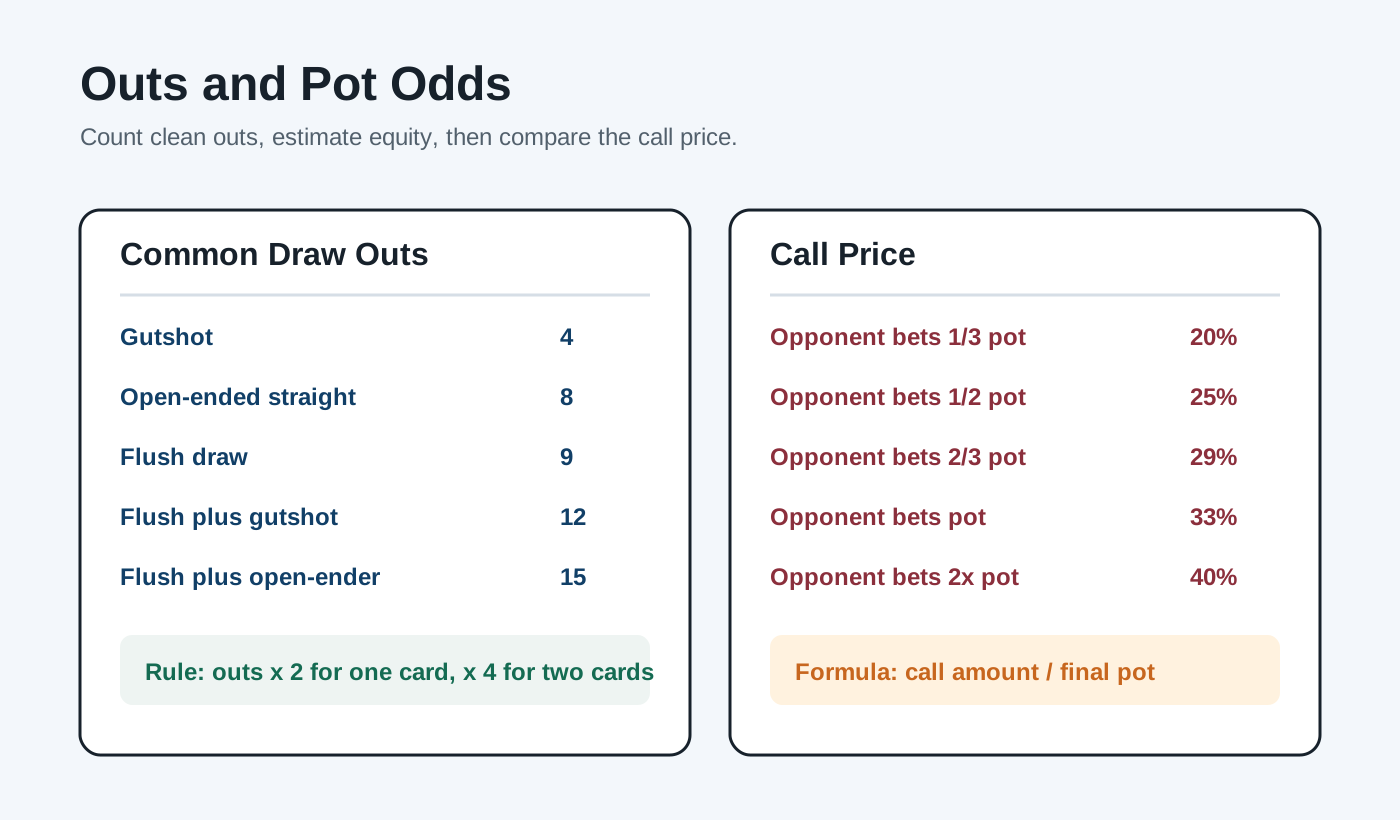
Common outs:
| Draw type | Typical outs | Quick note |
|---|---|---|
| Gutshot straight draw | 4 | One rank completes the straight |
| Open-ended straight draw | 8 | Two ranks complete the straight |
| Flush draw | 9 | Thirteen suits total minus four seen |
| Pair to trips | 2 | You hold a pair and need one matching rank |
| Two overcards to top pair | 6 | Often discounted because top pair may not always win |
| Flush draw plus gutshot | 12 | Usually strong, but check if outs are clean |
| Flush draw plus open-ender | 15 | Very strong draw, often semi-bluff candidate |
The most useful shortcut is the rule of two and four.
With one card to come, multiply your outs by about two to estimate your chance of improving. With two cards to come, multiply your outs by about four. It is not exact, but it is close enough for fast table decisions.
Examples:
- Four outs with one card to come is about 8%.
- Eight outs with one card to come is about 16%.
- Nine outs with one card to come is about 18%.
- Nine outs from flop to river is about 36%.
- Fifteen outs from flop to river is about 60%.
PokerStars' pot odds material uses this shortcut as a practical beginner tool. The important part is not perfect precision. The important part is comparing your estimated equity to the price you are being offered.
Clean Outs vs Dirty Outs
Not every out is clean. A clean out improves your hand and is likely to win. A dirty out improves your hand but can still leave you behind.
Example: you hold Qh-Jh. The board is Th-9h-2c. You have an open-ended straight draw and a flush draw. Many outs look good. But if the turn is Kh, you make a flush and a straight, while an opponent with Ah-xh has the nut flush. The card improved you, but it did not guarantee the pot.
Another example: you hold A-Q on K-Q-7 and think you have five outs against K-J: three aces and two queens. But if an ace comes, an opponent with A-K improves too. If a queen comes, you make trips and likely win. The ace outs may not be fully clean against every range.
Discount outs when:
- The card completes an obvious flush or straight for your opponent.
- Your pair improvement may still lose to a better pair.
- The pot is multiway and someone can already have a stronger draw.
- The board is paired and your flush or straight could lose to a full house.
Pot Odds in One Formula
Pot odds compare the cost of calling to the size of the pot you can win. Upswing's pot odds guide explains the core relationship clearly: you measure the call cost against the reward after the bet is included.
Use this formula:
Required equity = call amount / final pot
The final pot is the current pot, plus your opponent's bet, plus your call.
Example: the pot is $50. Your opponent bets $25. You must call $25. If you call, the final pot will be $100.
$25 / $100 = 25%.
You need about 25% equity to break even on the call, ignoring future betting.
Here is the quick version:
| Opponent bet size | Required equity to call |
|---|---|
| One-third pot | About 20% |
| Half pot | About 25% |
| Two-thirds pot | About 29% |
| Pot size | About 33% |
| 2x pot | About 40% |
Now combine pot odds with outs.
You hold Jh-Th on Ah-7h-2c-4s. The pot is $60 and your opponent bets $30 on the turn. You have a flush draw with nine outs. With one card to come, nine outs is roughly 18%. A half-pot bet requires about 25% equity. If your only way to win is making the flush, the direct pot odds are not good enough.
But poker is not only direct odds. If your opponent has a strong made hand and will pay off a river heart, implied odds can help. If your opponent may bet huge when the flush completes, or if your flush may not be best, reverse implied odds hurt.
For beginners, use this default: if the direct odds are clearly bad and you are out of position, fold weak draws. If the price is close, you have position, and you can win extra money when you improve, calling becomes more reasonable.
The Starting-Hand Plus Position Formula
You can simplify many preflop decisions with one question:
How strong is my hand for this exact seat and action?
Do not ask, "Is this hand playable?" Almost every hand is playable somewhere. Ask whether it is playable now.
Use this formula:
Hand quality + position + action before you + players behind + stack depth = preflop decision
Pocket nines on the button after everyone folds is a clear raise. Pocket nines under the gun facing a 3-bet from a tight player becomes more complex. A5 suited on the cutoff can be a good open. A5 offsuit under the gun should usually hit the muck.
If someone has already raised, your starting-hand threshold goes up. You are no longer choosing whether to enter a pot first. You are choosing whether to continue against a range that already showed strength.
Beginner response rules:
- Against an early-position raise, continue tighter.
- Against a late-position steal, defend more often from the big blind, but do not defend trash.
- 3-bet premium hands for value.
- Mix suited wheel aces, suited broadways, and a few blocker hands as advanced 3-bet bluffs only after you understand why.
- Avoid cold-calling too many offsuit broadways from out of position.
PokerCoaching's downloadable preflop charts are useful here because they separate raise-first-in spots from facing-raise and facing-3-bet spots. That distinction matters. A hand that opens profitably can still be a fold after someone else opens.
Preflop Raise, Call, or Fold Cheat Sheet
Here is a practical beginner decision tree.
If everyone folds to you:
- Raise your playable hands.
- Fold hands too weak for your position.
- Avoid open-limping as your default.
If one player raises before you:
- 3-bet your strongest value hands.
- Call hands that play well postflop, especially in position.
- Fold dominated offsuit hands.
- Tighten dramatically against early-position opens.
If there is a raise and a 3-bet before you:
- Continue only with strong hands unless you have a specific read.
- Do not cold-call speculative hands just because stacks are deep.
- Fold hands like KQo, AJo, and small suited aces more often than your ego wants to.
If you are in the small blind:
- Remember you will usually be out of position.
- Raise or fold more often than complete.
- Do not complete every suited hand because it feels cheap.
If you are in the big blind:
- You get a discount, so you can defend wider than other seats.
- The discount does not make weak hands profitable against all sizes.
- Defend more versus small late-position opens than versus large early-position opens.
The big blind is where beginners often confuse price with profit. Calling one more big blind can be fine. Calling too many weak hands and then paying off postflop is not fine.
Postflop Cheat Sheet After You See the Flop
The flop changes everything, but you can still use a simple structure.
First, identify your hand class:
- Strong value: overpair, top pair strong kicker, two pair, set, straight, flush.
- Medium showdown value: second pair, top pair weak kicker, ace high on some boards.
- Draw: flush draw, straight draw, combo draw.
- Air: missed hand with little equity.
Second, identify board texture:
- Dry boards: A-7-2 rainbow, K-8-3 rainbow.
- Wet boards: J-T-8 two-tone, 9-8-6 with a flush draw.
- Paired boards: K-K-4, 8-8-5.
- Monotone boards: three cards of one suit.
Third, identify range advantage. Who has more strong hands? If you raised from early position and the big blind called, A-K-4 often favors you. If you raised from the button and the big blind called, 9-8-7 can connect heavily with the big blind.
Use these beginner defaults:
- Value bet strong hands when worse hands can call.
- Check more often with medium hands that cannot handle a raise.
- Semi-bluff draws with fold equity, especially in position.
- Bluff less in multiway pots.
- Do not stack off one pair automatically on wet boards.
Example: you raise As-Kd from the cutoff and the big blind calls. The flop is K-7-2 rainbow. You have top pair top kicker on a dry board. Betting for value is standard.
Now you raise As-Kd from early position and two players call. The flop is T-9-8 with two hearts. You have ace high on a board that smashes callers. This is not a good automatic continuation bet. Check and avoid forcing a bluff into ranges full of pairs and draws.
[INTERNAL: poker pot odds guide]
Common Draw Spots and What They Mean
A flush draw has nine outs before discounting. It is strong enough to continue at reasonable prices, especially in position, but it is not a license to call any bet. On the turn, a naked flush draw has only about 18% equity to hit by the river.
An open-ended straight draw has eight outs. It is similar to a flush draw but often less visible when it completes. On J-T-4, holding Q-9 gives you eight outs to a straight: four kings and four eights.
A gutshot has four outs. Gutshots are easy to overcall. They improve only about 8% on the next card. Continue with gutshots when you have extra equity, position, implied odds, or fold equity. Fold them when facing large bets with no backup plan.
A combo draw can be very strong. If you have a flush draw plus an open-ended straight draw, you may have around 15 outs before discounting. These hands can often call, raise, or semi-bluff because they combine fold equity with real showdown equity.
Two overcards are not the same as a draw to the nuts. If you hold A-Q on T-7-2, you may think you have six outs to top pair. But an ace or queen does not always win, especially against sets, overpairs, or top pair that improves. Count overcard outs cautiously.
Cheat Sheet Adjustments for Real Tables
Charts are clean. Tables are not.
Against loose-passive players, tighten your bluffs and widen your value bets. If they call too much, make them pay with top pair, overpairs, and strong draws. Do not try to run fancy triple-barrel bluffs into people who hate folding.
Against tight players, steal more blinds and apply pressure on boards that favor your range. But when tight players raise big on the turn or river, give them credit until you see evidence they can bluff.
Against aggressive players, do not respond by calling everything. Tighten your opening ranges slightly out of position, 4-bet your best hands, and trap selectively when they attack too often. Let their aggression put money in when you have a hand that can continue.
Against short stacks, reduce speculative calls. Small pairs and suited connectors lose value when there is not enough money behind to win after you hit. Against deep stacks, speculative hands improve in position, but only if you can avoid paying off when you make the second-best hand.
In high-rake low-stakes games, calling too many marginal hands can be especially costly. Rake punishes small edges and passive pots. This is one reason modern preflop advice often favors raising or folding more than loose cold-calling.
The 10-Second Table Checklist
Before you act, run this checklist:
- What is my position?
- Has anyone entered the pot?
- Is my hand strong for this seat or just pretty?
- If I call or raise, will I be in position?
- What hands can worse opponents call with?
- What better hands can fold?
- If I am drawing, how many clean outs do I have?
- What equity does the pot price require?
- What happens on the next street if I miss?
- Is this a value spot, bluff spot, draw spot, or fold?
You will not answer every question perfectly in real time. That is fine. The goal is to stop autopilot. Even answering the first four questions will prevent many beginner leaks.
How to Study With This Poker Cheat Sheet
Do not try to memorize everything in one night. Study in layers.
Session one: memorize hand rankings and position names. Quiz yourself until you can name the seats from the button backward and list whether a flush beats a straight.
Session two: learn the starting-hand shape. Early position is tight. Middle position expands. Cutoff and button attack. Blinds defend with a discount but suffer out of position.
Session three: drill outs and pot odds. Write common draw types on paper and list their outs: gutshot 4, open-ender 8, flush draw 9, combo draw 12 to 15. Then practice calculating required equity for half-pot, pot-size, and overbet calls.
Session four: review hands. Pick five hands where you called preflop and lost. For each one, ask whether the hand was strong enough for the seat and action. Then pick five draw calls and compare your outs to the pot odds.
If you use a tracker, filter for cold calls by position, big blind defense, and turn calls with missed draws. If you do not use a tracker, keep a short session note with three hands: one preflop decision, one draw decision, and one river call.
Take Action Now
This Poker Cheat Sheet is useful only if it changes your next decision. Start with three rules today: fold dominated offsuit hands from early position, open wider only when position gives you leverage, and compare every draw call to the pot odds before clicking call.
Then add one study habit. After your next session, review one hand where you were unsure whether to call, raise, or fold. Write down the position, starting hand, pot size, bet size, outs, and result. The result matters less than whether your decision followed a clear process.
Poker gets complicated, but beginner improvement is often simple. Stronger starting hands, better position, cleaner outs, and disciplined pot-odds decisions remove a lot of expensive guesswork.
Frequently Asked Questions
What is the most important part of a Poker Cheat Sheet?
Position is usually the most important part because it changes how profitably you can play your starting hands. A hand that is too loose under the gun can be a clear raise on the button. After position, learn hand rankings, starting-hand groups, outs, and pot odds.
How many outs does a flush draw have?
A normal flush draw has nine outs because there are thirteen cards of each suit and you can see four of them: two in your hand and two on the board. Discount outs if the flush card may give someone else a better flush or complete a full house on a paired board.
What hands should beginners play from early position?
Beginners should play a tight range from early position: medium and high pairs, strong suited broadways, AQ, AK, and sometimes hands like AT suited or KJ suited in soft games. Avoid weak offsuit aces, weak kings, and random suited hands from early position.
What pot odds do I need to call a half-pot bet?
A half-pot bet requires about 25% equity to call. For example, if the pot is $50 and your opponent bets $25, calling $25 creates a final pot of $100. Your call is 25% of that final pot.
Should I follow starting hand charts exactly?
No. Use charts as defaults, then adjust for stack depth, rake, table style, and opponents. A chart can show that a hand is normally playable, but a tight 3-bet, short stack, bad position, or calling-heavy opponent can change the best decision.