Big Blind Defense Poker Strategy: Stop Overfolding to Steals
Big Blind Defense Poker Strategy: Stop Overfolding to Steals
Big Blind Defense Poker starts with one uncomfortable truth: you are supposed to lose money from the big blind. You post a full blind before seeing your cards, you usually play out of position after the flop, and late-position players are actively trying to steal from you. The goal is not to turn the big blind into a winning seat. The goal is to stop surrendering too much and make every steal attempt work harder.
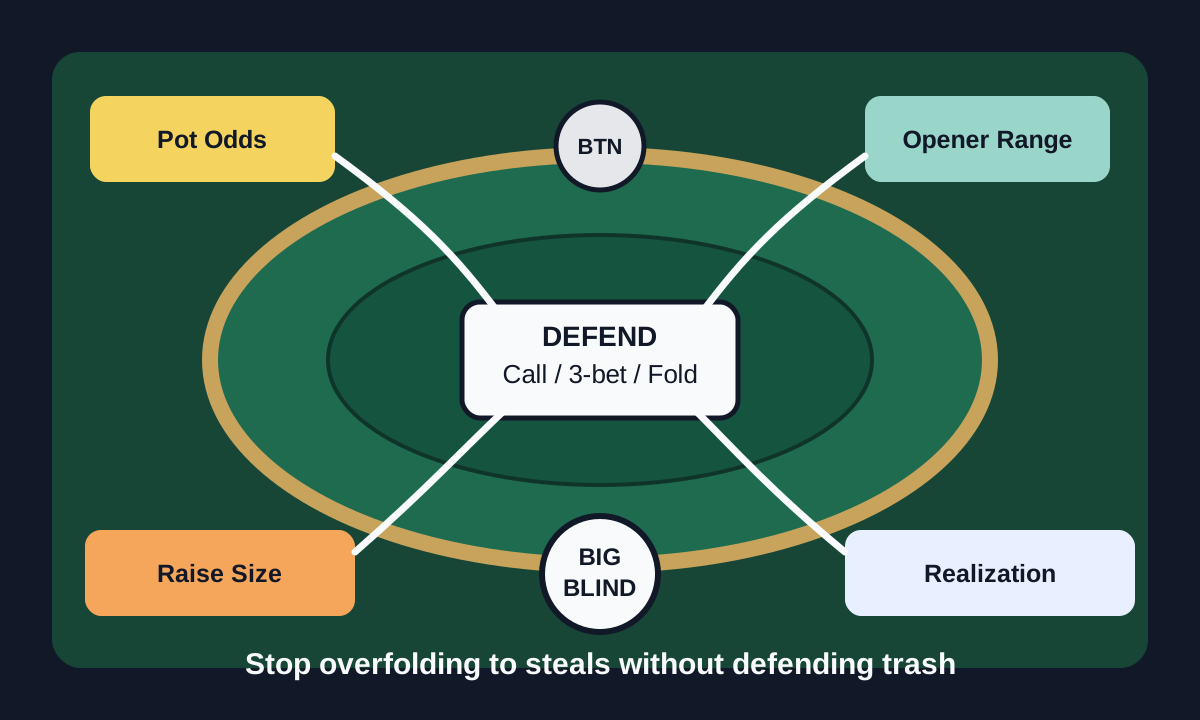
If you fold too often to button, cutoff, and small blind opens, observant players get a clean exploit. They can raise a wider range, win your blind uncontested, and avoid difficult postflop decisions. If you defend every suited hand and every hand that "looks live," you create the opposite problem: too many weak out-of-position pots. Good defense is the middle path. You use pot odds, opponent range, raise size, rake, stack depth, and hand playability to decide whether to call, 3-bet, or fold.
This guide is written for no-limit hold'em players who understand basic preflop ranges but still leak from the big blind. The examples focus mostly on 100 big blind cash games and common tournament steal spots, with practical adjustments for online and live games.
Why Big Blind Defense Poker Matters Against Steals
The big blind is different from every other seat. When the button opens and the small blind folds, you are last to act preflop. You already have one big blind invested. No one can squeeze behind you if you call. That discount is why big blind defense ranges are wider than cold-calling ranges from seats like the cutoff or button.
But that discount does not make defense automatic. You still pay more chips to continue, and you will usually play the rest of the hand out of position. A weak suited hand may have enough raw equity against a button steal, yet fail to realize that equity when it misses and faces a continuation bet. A hand like K-4 offsuit may look close against a wide opener, but when it makes one pair, it often makes a dominated pair with poor turn and river prospects.
PokerCoaching defines a steal as a raise designed to win the blinds, most often from late position. That matters because a late-position steal range is wider than an early-position open. Against under the gun, you should respect a strong range and defend tightly. Against the button or small blind, folding the same hands can become a leak because their range contains many more marginal holdings.
PokerStrategy describes blind defense as the counter to blind stealing, often by raising to take initiative or forcing the attacker to continue. In modern no-limit hold'em, that counter is not only 3-betting. It is a structured mix of calls, value 3-bets, selective bluff 3-bets, and disciplined folds.
[INTERNAL: poker positions guide]
The Big Blind Defense Poker Formula: Price, Range, Realization
Most players overcomplicate big blind defense by asking, "Is this hand good enough?" The better question is: "Can this hand profitably continue against this player, this size, and this future game tree?"
Use a three-part formula.
- What price am I getting?
- How wide is the opener?
- How well will my hand realize equity?
The price is the easiest part. Suppose blinds are $1/$2. The button raises to $5, the small blind folds, and you are in the big blind. The pot contains the button's $5, the small blind's $1, and your $2. You must call $3 to contest an $8 pot. If you call, the final pot before rake is $11. Your direct break-even equity is $3 / $11, or about 27.3%.
That does not mean every hand with 27.3% raw equity is a call. Equity realization changes everything. GTO Wizard explains equity realization as a measure of how well a hand performs relative to its raw equity. Out-of-position hands generally realize less equity, while hands that can value bet, bluff, or improve to strong holdings realize more.
That is why 9-7 suited can be a better defend than Q-6 offsuit even if their raw equity looks close. The suited connector can make straights, flushes, pair-plus-draws, and credible semi-bluffs. The offsuit queen often makes a weak top pair or second pair, then faces pressure from better queens, overcards, and barreling ranges.
A Simple Pot Odds Example
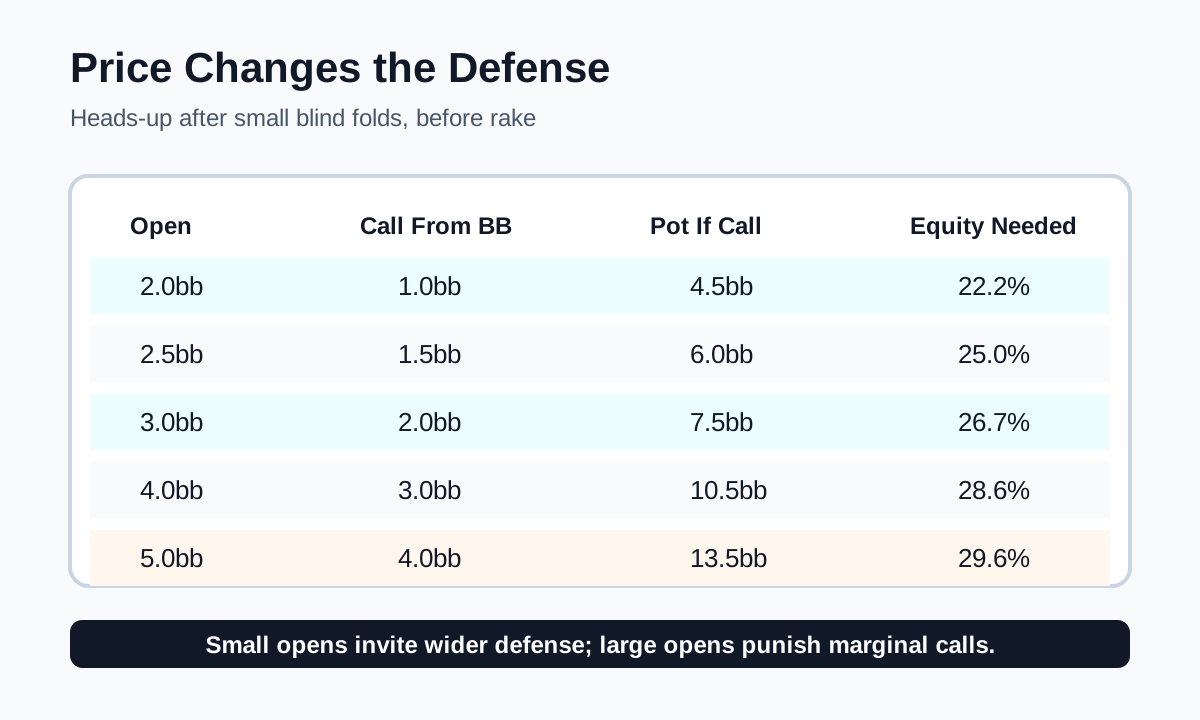
Here are common heads-up steal prices after the small blind folds, ignoring rake:
| Open size | Call amount from BB | Pot after you call | Direct equity needed |
|---|---|---|---|
| 2.0bb | 1.0bb | 4.5bb | 22.2% |
| 2.5bb | 1.5bb | 6.0bb | 25.0% |
| 3.0bb | 2.0bb | 7.5bb | 26.7% |
| 4.0bb | 3.0bb | 10.5bb | 28.6% |
| 5.0bb | 4.0bb | 13.5bb | 29.6% |
The numbers look close, but the range impact is large. Against a 2x open, you are often getting such a good price that many marginal suited and connected hands can continue against a wide late-position range. Against a 4x or 5x open, the extra chips push weak hands out quickly, especially in raked cash games.
GTO Wizard's work on large preflop raises makes this point directly: as raises get larger, callers should fold more often because the price worsens. The big blind's posted blind matters less when the open is huge. If someone opens to 7bb, your one blind discount is not a license to splash around.
Range Comes Before Card Pride
Your hand does not play in a vacuum. It plays against the opener's range.
Against an under the gun open, A-7 suited is not thrilled. The opener has more A-K, A-Q, big pairs, and strong suited broadways. Your ace is dominated often, your one-pair value is fragile, and you do not win the pot uncontested very often after the flop.
Against a button steal, A-7 suited improves dramatically. The button can have suited kings, suited queens, weaker aces, offsuit broadways, suited connectors, and random low-equity steals depending on the player pool. Your hand blocks some strong ace-x, can make the nut flush, and can sometimes call or 3-bet profitably.
This is the first correction for overfolders: stop defending one static chart. Defend a range that moves with the opener's position.
Build a Practical Defense Range Without Memorizing 169 Hands
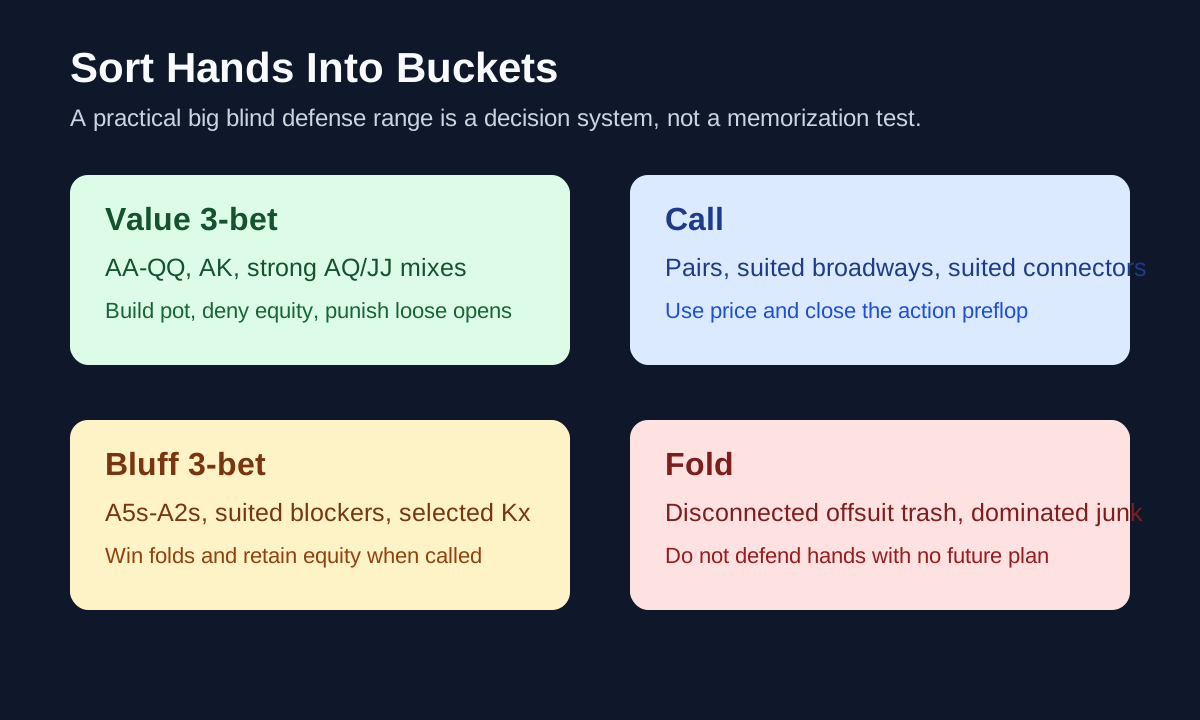
You do not need to memorize every combo to stop overfolding. You need a reliable way to sort hands into buckets.
Start with three continue buckets:
- Value 3-bets: hands happy to build a larger pot.
- Calls: hands that realize equity well at the offered price.
- Bluff or semi-bluff 3-bets: hands that benefit from fold equity and have useful blockers or playability.
Then keep one fold bucket: hands that do not realize enough equity, even with the discount.
Against a button 2.5x open at 100 big blinds in a typical cash game, a reasonable beginner-to-intermediate defense might include:
| Hand class | Default action |
|---|---|
| AA-QQ, AK | Mostly 3-bet for value |
| JJ-99, AQs-ATs, KQs, AQo | Mix call and 3-bet depending on player |
| 88-22 | Often call; 3-bet selectively against frequent folders |
| Suited aces A9s-A2s | Call often; 3-bet some wheel aces |
| Suited broadways | Call often, 3-bet strongest or blocker-heavy combos |
| Offsuit broadways like KQo, KJo, QJo | Continue selectively; fold weaker dominated offsuit hands |
| Suited connectors and one-gappers | Call more versus small sizes; fold more versus large sizes |
| Weak offsuit trash | Fold |
This is not a solver chart. It is a framework. Your exact range should tighten when rake is high, the raise size is large, the opener is tight, stacks are awkward, or you are uncomfortable postflop. It should widen when the opener is stealing too much, uses small sizes, plays fit-or-fold postflop, or opens from the small blind where you have position.
Hands That Are Usually Under-Defended
Overfolders tend to miss these profitable continues:
Suited kings: K-9 suited through K-5 suited can be useful against button opens, especially versus small sizes. They make flushes, top pairs, and blocker-driven 3-bet candidates. Do not treat every suited king as gold, but do not auto-fold them.
Suited connectors: 9-8 suited, 8-7 suited, and 7-6 suited have enough playability to continue in many late-position steal spots. Their value falls fast against big raises and tight ranges.
Small pairs: Pocket pairs are not just "set mines." Out of position, they can be awkward, but against small late-position raises they often have enough equity and postflop clarity to defend.
Suited wheel aces: A-5 suited through A-2 suited block ace-x value hands, can make the nut flush, and have straight potential. They are common 3-bet bluff candidates because they combine blockers with equity when called.
Hands That Are Often Over-Defended
The worst big blind leaks are usually offsuit.
K-6 offsuit, Q-7 offsuit, J-8 offsuit, T-6 offsuit, and similar hands look tempting because they contain high cards. They do not play nearly as well as suited or connected hands. When they hit one pair, they are frequently dominated. When they miss, they have few strong draws to continue with.
Weak offsuit aces are another trap. A-3 offsuit against a button open has blocker value, but calling too many offsuit aces creates miserable postflop spots. You make top pair with a bad kicker, call flop, and then hate most turns.
If you want one quick rule, use this: when choosing close calls from the big blind, prefer suited, connected, paired, or blocker-heavy hands. Fold more disconnected offsuit hands than your ego wants to fold.
Adjust Big Blind Defense Poker by Raise Size
Raise size is one of the most important defense inputs because it changes both your price and the opener's range.
Against a 2x button open, you should defend wide. You call only one more blind, close the action, and face a range that is often wide. Many players fold far too much here because they think, "I am out of position." Out of position matters, but it does not erase a strong price.
Against a 2.5x open, you still defend a meaningful range, but the weakest offsuit hands should disappear. Your suited and connected hands remain important. Your 3-bets can pressure button steals, especially when the opener folds too much to blind reraises.
Against a 3x open, tighten another step. In live games, many recreational players use 3x as a default, not necessarily as a sign of strength. Even so, you are paying more. Continue hands should either have clear equity realization or strong blocker/3-bet value.
Against 4x and 5x opens, especially in live cash games, stop using online min-raise defense instincts. Upswing notes that cash games often include larger opens and no antes, which worsens the big blind's price. GTO Wizard's raise-size research also emphasizes that the big blind's calling decisions are highly sensitive to raise size because the big blind is closing action and calculating based on pot odds.
This is where many players misapply "defend your big blind." They hear that they should not overfold, then call a 5x live open with 8-6 suited because it would be a defend versus 2x online. Those are different spots. A hand can be a clear call against 2bb and a clear fold against 5bb.
Cash Games: Rake Makes Loose Calling Worse
Cash-game big blind defense has one extra enemy: rake.
In many cash games, no rake is taken if the pot ends preflop, but rake is taken when the hand sees a flop. That changes the value of calling. You may appear to get a direct price, but the final pot you can win is effectively smaller after rake. This pushes some marginal calls into folds or 3-bets.
GTO Wizard's preflop raise-sizing work highlights that rake makes calling raises less appealing and can increase the incentive to 3-bet instead of call. Upswing makes the same practical point in its big blind defense guidance: cash games have no antes, often larger raises, and rake, all of which make big blind defense tighter than tournament defense.
That does not mean "never call from the big blind in cash games." It means you should be selective with the bottom of your range.
Good cash-game calls tend to be:
- Suited hands with nut potential.
- Connected hands that can make strong draws.
- Pairs with clear showdown or set potential.
- Broadways that dominate parts of the opener's range.
Bad cash-game calls tend to be:
- Weak offsuit hands with poor domination.
- Suited junk with no connectivity or high-card value.
- Hands that make second-best flushes or dominated pairs too often.
- Hands you will fold too often after calling preflop.
If your site or room has high rake, trim the weakest suited junk first. Do not start by folding all your playable suited broadways or pairs. Rake punishes marginal calls most heavily, not your robust continues.
[INTERNAL: poker rake and win rate guide]
Tournaments: Antes and Stack Depth Change the Defense
Tournament big blind defense is usually wider than cash-game defense because antes create more dead money and open sizes are often smaller. If the button min-raises and antes are in play, your price can be excellent.
That said, tournaments add stack-depth and payout pressure.
At 40 big blinds, you can call many hands against late-position steals, especially when antes are in play. You still need postflop discipline, but you have enough room to check-raise, float, lead turns, and realize equity with suited and connected hands.
At 20 big blinds, some hands shift from calls to shoves. Pocket pairs, suited aces, broadways, and blocker-heavy hands can become profitable 3-bet jams against players opening too wide. But not every playable hand wants to jam. Some hands are too strong to fold and too weak to shove, so calling remains part of the strategy against small raises.
At 10 big blinds and below, the game becomes more push-fold-heavy, but you still should not blindly surrender your big blind. Your pot odds can be extreme, especially against min-raises with antes. The key is knowing whether the hand realizes equity well enough when the stack-to-pot ratio is low.
ICM can tighten defense near bubbles and pay jumps. If calling and losing damages your tournament equity badly, you cannot use pure chip-EV instincts. Against big stacks applying pressure, you may need to fold hands that are chip-EV calls. Against short stacks opening too wide, you may have profitable reshoves.
The tournament adjustment is not "defend any two because antes." It is "recognize that antes and small sizes improve your price, then adjust for stack depth and payout pressure."
Use 3-Bets to Stop Automatic Steals
Calling is necessary from the big blind, but calling alone is not enough. If you never 3-bet, late-position openers realize too much equity. They steal wide, c-bet often, and force you to defend postflop with a capped range.
Your value 3-bets are straightforward: premium pairs, A-K, and often A-Q or strong suited broadways depending on the opponent. Against loose button opens, hands like J-J, T-T, A-Q suited, and A-J suited become more attractive as 3-bets because they dominate the opener's continuing range.
Your bluff 3-bets should not be random. Good candidates have one or more of these traits:
- Blockers to strong continues, such as suited wheel aces.
- Playability when called, such as suited connectors.
- Poorer call value but useful fold equity, such as some offsuit ace blockers.
- Clear exploit value against players who overfold to 3-bets.
Avoid 3-betting hands that are strong enough to call but hate being 4-bet unless you have a plan. For example, K-Q suited is often too good to turn into a pure bluff against many players. It can 3-bet for value or call, depending on opener tendencies. A-5 suited is easier to use as a semi-bluff because it blocks A-A and A-K, can make strong draws, and can fold cleanly to a 4-bet in many cash-game configurations.
Sizing Your Big Blind 3-Bets
Out of position, your 3-bets should usually be larger than in-position 3-bets. Against a button open to 2.5bb, a common cash-game size is around 10bb to 11bb. Against a 3bb open, 11bb to 12bb is common. In live games with loose callers, you may need to go larger for value.
Do not min-click 3-bet from the big blind unless you are using a very specific strategy. Small 3-bets give the opener excellent odds and leave you out of position in a bloated pot.
Against short stacks in tournaments, the size may become all-in. If you have 18bb and the button opens to 2bb, a 3-bet shove creates maximum fold equity and denies realization. Choose hands that perform well when called and benefit from folds.
Postflop Plans After Defending the Big Blind
Preflop defense only works if you know what happens next. Many players are technically under-defending preflop because they are uncomfortable after the flop. They fold hands they should call because they do not want to face c-bets. The solution is not to become a calling station. The solution is to defend preflop with hands that have clear postflop plans.
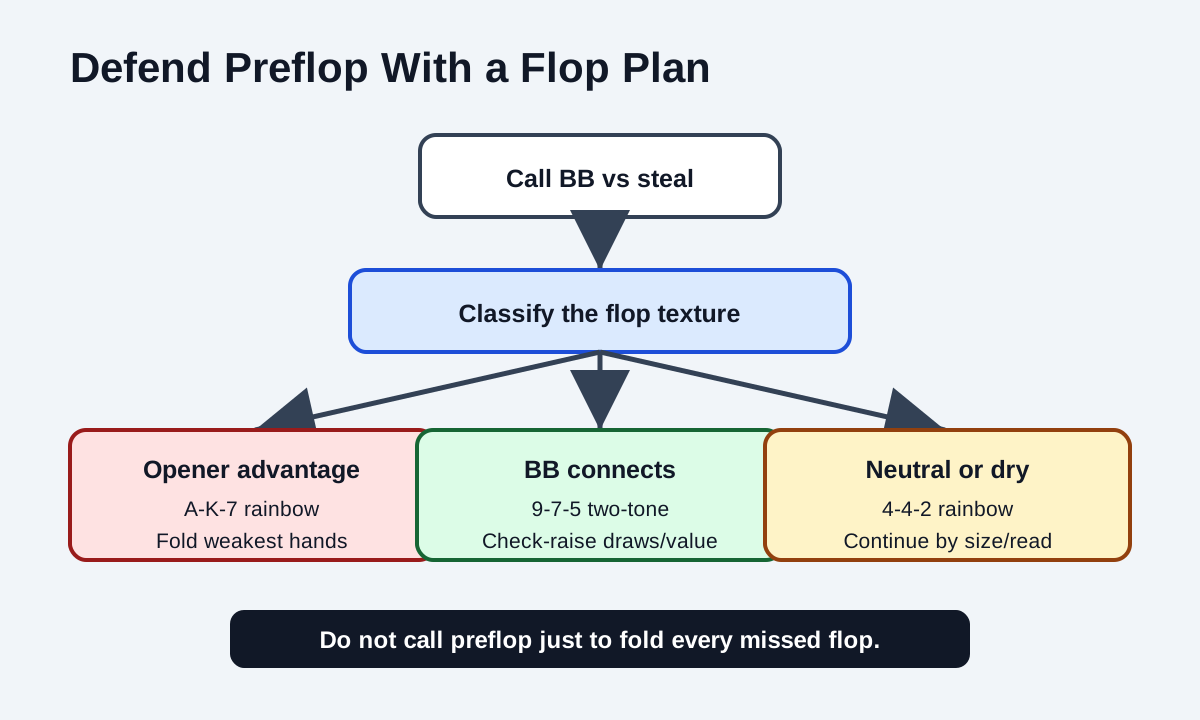
Start by classifying flops.
On A-K-7 rainbow, the button has a strong range advantage. You defend many hands preflop, so your range contains more weak pairs and misses. Check-folding your worst hands is fine. Continue with top pair, good second pairs, strong backdoors, and some check-raise candidates if the opponent over-c-bets small.
On 9-7-5 two-tone, the big blind has more nutted and connected hands. You defend 8-6 suited, 7-5 suited, 9-7 suited, sets, and pair-plus-draws more often than the button opens them. This is a board where you can check-raise more aggressively against small c-bets.
On 4-4-2 rainbow, neither player has many strong made hands, but the opener still has overpairs and high-card advantage. Your defense depends heavily on bet size and opponent tendencies. Some ace-highs and backdoor hands continue versus small bets; garbage folds.
Do Not Defend Preflop Then Overfold Flops
If you call preflop and fold every missed flop, stealers still profit. You need to continue with more than made hands against small c-bets.
Look for:
- Backdoor flush plus overcard.
- Gutshot plus backdoor flush.
- Pair plus backdoor straight potential.
- Ace-high with showdown value against small sizing.
- Strong draws that can check-raise.
The key is not "float everything." The key is choosing hands that can improve, bluff later, or call down on favorable runouts. GTO Wizard's equity-realization work shows that weak out-of-position hands often under-realize equity because they get pushed off before showdown. You counter that by defending hands with better turn prospects and by applying pressure on boards that favor your range.
Lead Turns Selectively
After defending the big blind, some turn cards improve your range more than the opener's. Low straight-completing cards, flush-completing cards, and paired low cards can create leads or check-raises if the flop checked through or the c-bet line capped the opener.
For example, button opens, you call with 8-7 suited, and the flop is 9-6-2 rainbow. You check, button bets small, you call. The turn is a 5. That card completes your straight and interacts strongly with your defense range. Against opponents who over-c-bet flop and then check back too much, leading some turns for value and bluffs can recover equity.
Do not force fancy lines. If you are still building fundamentals, focus on defending reasonable flops, check-raising strong draws, value betting when checked to, and avoiding automatic turn folds.
Exploit Player Pools That Steal Too Much
The easiest big blind money comes from players with obvious steal leaks.
Against a button who opens too wide and folds too much to 3-bets, expand your 3-bet bluff range. Add suited wheel aces, some suited kings, and blocker-heavy offsuit aces. Keep your sizing consistent so your range is not face-up.
Against a button who opens wide and calls too many 3-bets, shift value-heavy. 3-bet bigger with hands that dominate: A-J suited, A-Q, K-Q suited, T-T, J-J, and better. Reduce low-equity bluff 3-bets because they are not folding enough.
Against a button who opens wide and c-bets too much, call preflop with playable hands and check-raise boards that connect with your range. Punish automatic small bets on textures like 8-6-4, 9-7-5, and T-8-6.
Against a nitty cutoff opener, do the opposite. Fold more dominated broadways, reduce suited junk, and avoid bluff 3-betting into a strong continuing range.
Against the small blind, defend widest because you have position postflop. When the small blind opens, they are trying to steal from only one player. Your big blind defense should include more calls and more 3-bets, especially if they use small sizes. The big blind's positional advantage in blind-versus-blind pots is a major reason you should not overfold here.
[INTERNAL: blind stealing strategy]
Database Review: Find Your Overfolding Leak
If you use tracking software, big blind defense is easy to audit. PokerTracker defines "Fold BB to Steal" as the percentage of times a player folds the big blind when facing a steal raise. That stat gives you a direct window into whether you are surrendering too often.
Do not obsess over one perfect number. Your correct fold frequency depends on stakes, rake, table format, population sizes, ante structure, and opponent mix. Instead, review by spot.
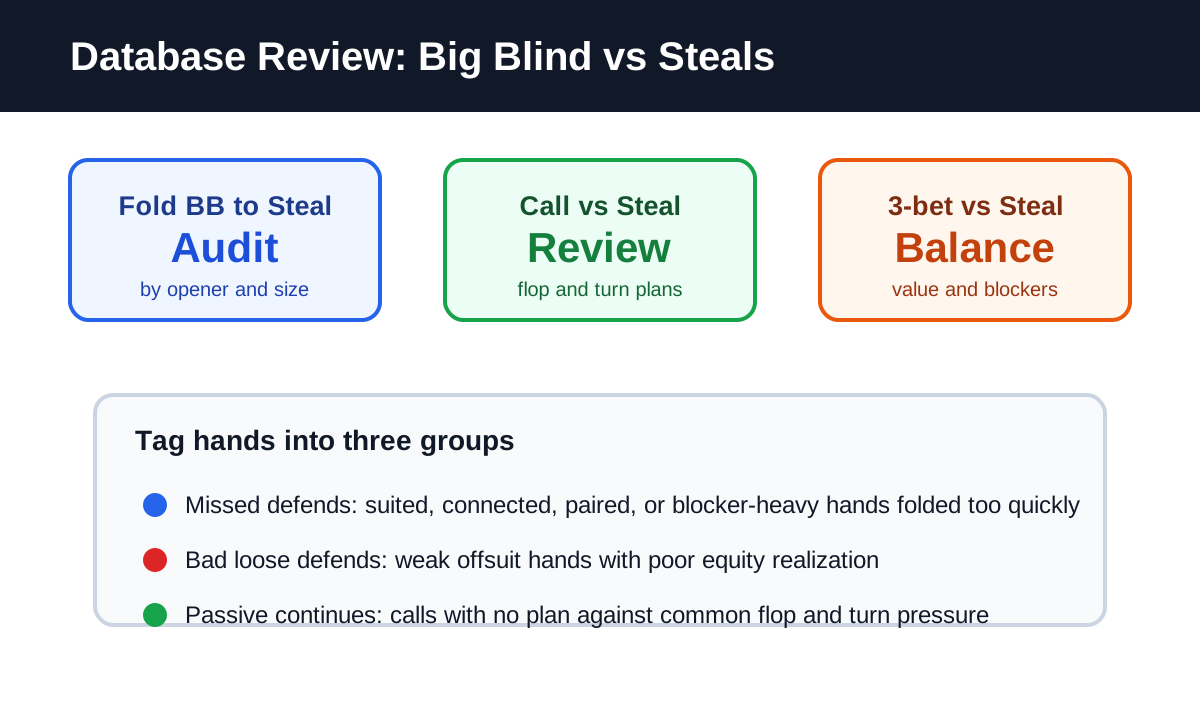
Start with these filters:
| Filter | What to review |
|---|---|
| BB facing button steal | Are you folding too much to 2x and 2.5x opens? |
| BB facing cutoff steal | Are you defending dominated hands against tighter ranges? |
| BB facing small blind open | Are you using your position or overfolding blind-versus-blind? |
| BB call vs steal, saw flop | Are you folding too much to small c-bets? |
| BB 3-bet vs steal | Are your 3-bets only premiums? |
| BB vs large live-style opens | Are you calling too wide against 4x and 5x? |
Then tag hands in three groups.
Group one: clear missed defends. These are hands you folded preflop that should usually continue against a small late-position open, such as suited connectors, suited aces, suited broadways, or medium pairs.
Group two: bad loose defends. These are weak offsuit hands you called because of frustration or curiosity. If the hand cannot make strong draws, strong pairs, or credible bluffs, it probably belongs in the fold bucket.
Group three: passive continues. These are hands you called preflop, check-called flop, and gave up too often on turns where your range improved. Some of these are fine. Others reveal that you are defending preflop without a turn plan.
Your goal is not to force a tracker stat into a theoretical range. Your goal is to identify repeatable mistakes. If you fold big blind to button steals at a very high rate, start by adding the cleanest suited and connected hands. If your loss rate worsens because you add too much trash, trim the worst offsuit and low-suited hands.
Common Big Blind Defense Mistakes
The first mistake is defending based only on pot odds. Pot odds are necessary, but they are not sufficient. A hand can have enough raw equity and still perform poorly out of position.
The second mistake is ignoring raise size. A 2x open and a 5x open are not the same problem. Your defense range should tighten as the open size grows.
The third mistake is using one range against every position. Button steals are wide. Cutoff steals are narrower. Under the gun opens are much stronger. Small blind opens create blind-versus-blind pots where you have position.
The fourth mistake is never 3-betting. If your big blind defense is only calls, good opponents can open aggressively and realize equity. You need value 3-bets and selective bluff 3-bets.
The fifth mistake is defending preflop and surrendering postflop. If you call wide, you must continue on some flops without made hands. Otherwise, your preflop calls become donations.
The sixth mistake is copying tournament ranges into cash games. Antes, stack depth, and rake change everything. Tournament big blind defense is often wider, especially against small opens. Cash-game defense should respect rake and larger sizing.
A Practical Big Blind Defense Checklist
Before you fold to a steal, run this quick checklist.
- Who opened?
- What size did they use?
- Are antes or rake relevant?
- How deep are the stacks?
- Does my hand realize equity well?
- Can I profitably 3-bet instead of call?
- What flops will I continue on?
If the opener is the button, the size is small, stacks are playable, and your hand is suited, connected, paired, or blocker-heavy, do not auto-fold. If the opener is tight, the size is large, the game is highly raked, and your hand is disconnected offsuit trash, fold without guilt.
The big blind is a defensive seat, not a surrender seat. The difference is discipline. You are allowed to fold bad hands. You are not allowed to give late position a risk-free steal every orbit.
Frequently Asked Questions
What is Big Blind Defense Poker?
Big Blind Defense Poker is the strategy of responding from the big blind after another player raises. It includes calling, 3-betting, and folding based on pot odds, opener range, raise size, stack depth, rake, and equity realization.
How often should I defend the big blind against a button steal?
There is no single correct frequency. You should defend more against small button opens and less against large opens, tight players, and high-rake cash games. As a practical rule, if you are folding almost every big blind to 2x or 2.5x button steals, you are probably overfolding.
Should I call or 3-bet more from the big blind?
You need both. Calling uses your pot odds and closes the action preflop. 3-betting prevents late-position players from opening too freely. Use value 3-bets with strong hands and selective bluff 3-bets with blockers or playable suited hands.
Why are suited hands better big blind defends than offsuit hands?
Suited hands realize equity better because they can make flushes, semi-bluffs, and stronger turn continues. Offsuit hands often make weak one-pair holdings and have fewer ways to continue when they miss.
Should tournament players defend the big blind wider than cash-game players?
Often, yes. Antes and smaller open sizes improve the big blind's price in tournaments. Cash games usually have no antes, larger opens, and rake, which push marginal calls toward folds or 3-bets.
Take Action Now
Open your last 5,000 to 20,000 hands and filter for big blind versus cutoff, button, and small blind steals. Mark the hands you folded too quickly, the hands you defended too loosely, and the spots where you called preflop with no postflop plan. That review will do more for your Big Blind Defense Poker game than memorizing one static chart.