Best Free Poker Tools for Studying: Equity, Pot Odds, ICM, and Hand Review
Best Free Poker Tools for Studying: Equity, Pot Odds, ICM, and Hand Review
Free Poker Tools can take you a long way if you use them with a clear study process. You do not need to buy a solver on day one, and you do not need ten subscriptions before you can fix basic leaks. You need tools that answer specific questions: how much equity your hand has, whether a pot-odds call is profitable, how tournament payouts change shove and call ranges, and which hands from your own sessions deserve review.
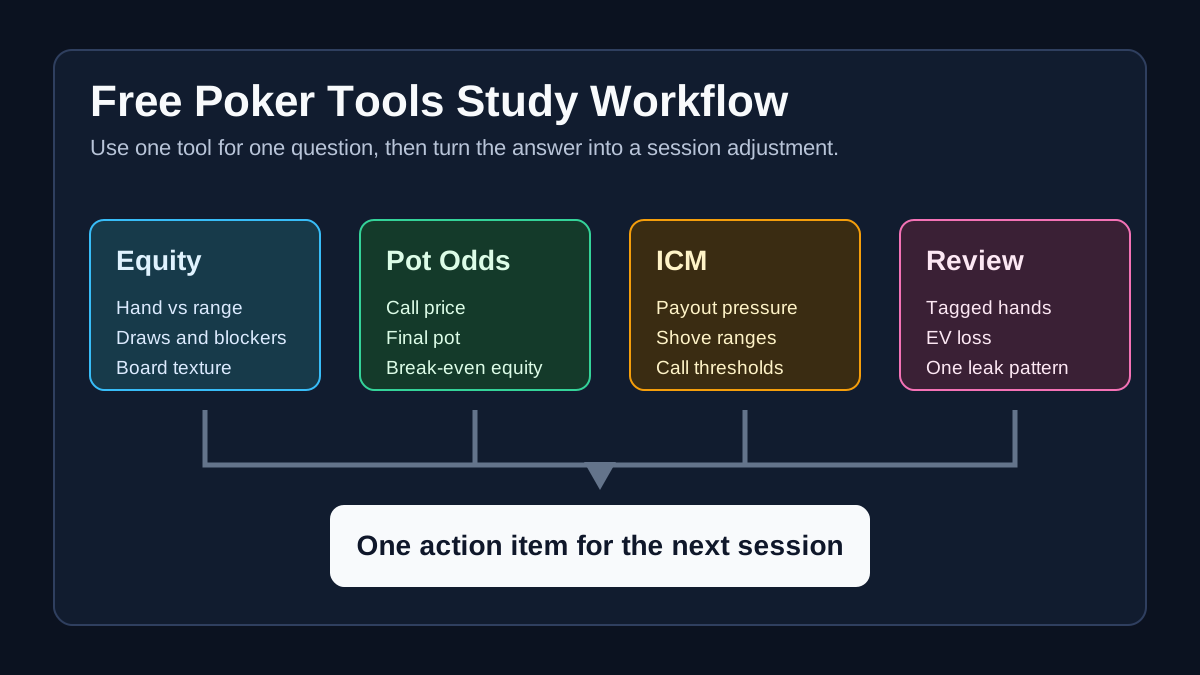
The key is to stop collecting tools and start assigning jobs. An equity calculator is not a hand-review system. A pot-odds chart is not an ICM trainer. A tracker trial is not a permanent free database. A limited solver tier is useful, but only when you spend those limited hands on spots that matter.
This guide gives you a practical free-tool stack for no-limit hold'em study. It includes true free tools, free tiers, and free trials where the limit is important. The goal is not to rank every app on the internet. The goal is to help you build a study routine that improves decisions without wasting money or time.
Free Poker Tools: What Actually Deserves a Spot
The best Free Poker Tools do one job cleanly. If a tool makes you watch ads, sign up for questionable offers, or trust anonymous strategy claims, skip it. Poker study already has enough noise.
Use this rule: every tool in your stack should answer one repeatable question.
- Equity tool: "How often does my hand or range win by showdown?"
- Pot-odds tool: "How much equity do I need to call this bet?"
- ICM tool: "Does tournament payout pressure change the chip-EV answer?"
- Hand-review tool: "Which decisions cost me the most, and what pattern should I fix?"
That division matters because beginners often misuse tools. They run A-K against queens, see a percentage, and think they studied. Or they upload hands to an analyzer, sort by the biggest losing pot, and ignore a smaller mistake that repeats 30 times per week.
Good study is narrower. Pick one hand, one decision node, and one question. Then use the tool that matches that question.
True Free vs Limited Free vs Trial
Not all "free" means the same thing. A true free calculator may let you run unlimited basic math, but it may not save ranges, support every format, or import hand histories. A limited free tier may be excellent for focused study but useless for bulk review. A free trial may be powerful for two weeks and then become paid software.
Treat each category honestly:
- True free: good for ongoing fundamentals, quick checks, and low-pressure practice.
- Limited free tier: good for daily drills and selective review.
- Free trial: good for a planned evaluation period, not a long-term budget plan.
This is why your first study setup should be simple. Use free math tools every week. Save limited analyzer credits for hands where you already wrote down the question. Use trials only when you have enough hands ready to review.
Best Free Poker Tools for Equity Study
Equity is your share of the pot over the long run. If your hand has 40 percent equity against a range, it expects to win about 40 percent of the pot before future betting changes the situation. That does not mean you will win this exact hand. It means the matchup has that long-run showdown value from the current point.
For equity study, the best free tool is one that lets you compare hands and ranges. PokerNews' equity calculator explainer makes the useful distinction clearly: free calculators are fine for quick hand checks, while paid tools may add deeper analysis. For a beginner or low-stakes player, quick checks are enough to build strong instincts.
Start with three drills.
First, memorize common all-in matchups. A-K versus Q-Q, A-A versus suited connectors, top pair against a flush draw, set against open-ended straight draw. You do not need exact decimals. You need useful anchors.
Second, compare hand versus range. For example, if you call a cutoff open in the big blind with K-J suited, do not run only K-J suited against A-Q. Run K-J suited against a reasonable cutoff opening range. Poker is range versus range far more often than hand versus hand.
Third, test board texture. Put A-K on A-7-2 rainbow, then on K-Q-T two-tone, then on 9-8-7 two-tone. The same preflop hand behaves very differently once ranges and boards interact.
Equity Example: Flush Draw Facing a Turn Bet
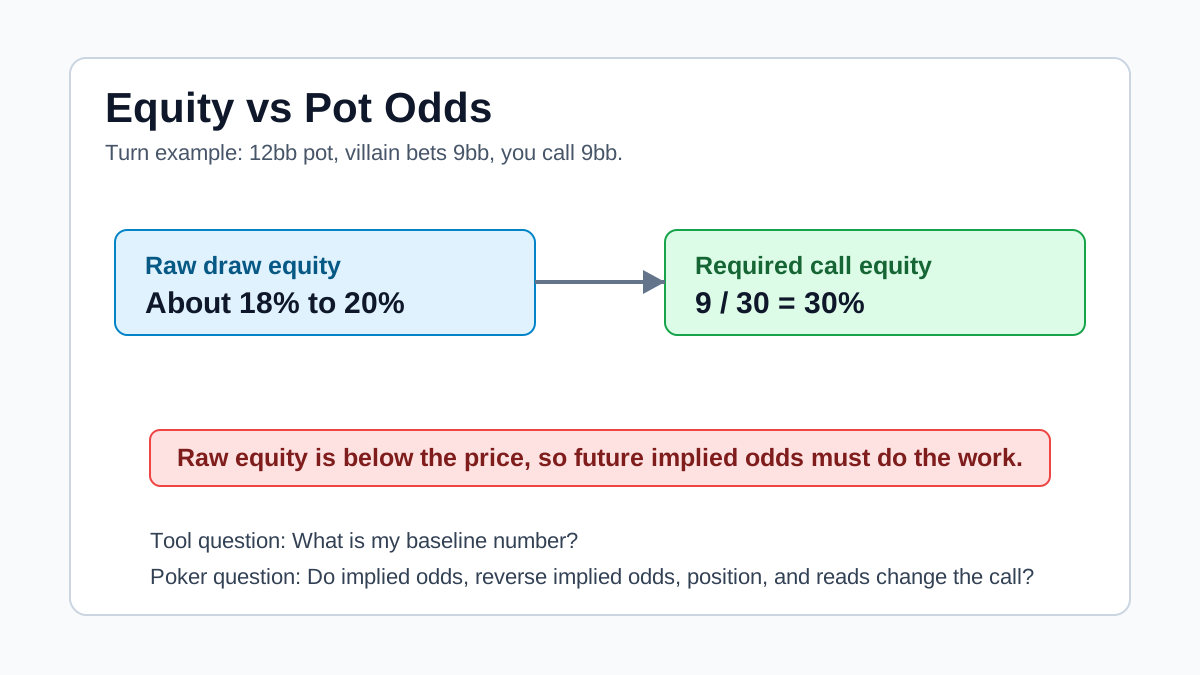
You defend the big blind with Jc Tc. The button opens, you call, and the flop is Ac 8c 3d. You check-call a small c-bet. The turn is 2s. The pot is 12bb and villain bets 9bb.
Your obvious outs are nine clubs. With one card to come, a nine-out flush draw has roughly 18 to 20 percent raw equity before considering implied odds, reverse implied odds, or whether all clubs are clean.
Now compare that to the price. You must call 9bb to win the pot that will be 30bb after your call. Required equity is 9 / 30, or 30 percent. Raw equity alone does not justify the call.
That does not automatically mean fold. If villain pays off too much when the flush arrives, implied odds can help. If villain has nut flush draws or can shove rivers that are hard to call, reverse implied odds hurt. The tool gives you the starting number; your poker judgment decides whether future money changes it.
Free Poker Tools for Pot Odds and Calling Math
Pot odds are the fastest math upgrade for most players. PokerStars' pot-odds lesson explains the basic comparison: you measure the price of a call against the total pot you can win, then compare that required equity to your chance of winning.
The clean formula is:
Required equity = call amount / final pot after you call
If the pot is 100 and your opponent bets 50, you call 50 to win a final pot of 200. Your required equity is 50 / 200, or 25 percent. If your hand wins more than 25 percent of the time, the call is profitable before rake and future-action effects.
You can study pot odds with a calculator, a spreadsheet, a chart, or a note card. The tool matters less than repetition. The important part is learning common bet sizes:
| Bet Size | Final Pot After Call | Required Equity |
|---|---|---|
| 25 into 100 | 150 | 16.7% |
| 50 into 100 | 200 | 25.0% |
| 75 into 100 | 250 | 30.0% |
| 100 into 100 | 300 | 33.3% |
| 150 into 100 | 400 | 37.5% |
Those numbers should become automatic. When a player bets half pot, you need 25 percent equity. When they bet pot, you need one-third. When they overbet 150 percent pot, you need 37.5 percent.
Pot Odds Example: River Bluff Catch
You call the big blind with Kd Qd against a cutoff raise. The board runs K-9-4-2-7 with missed clubs. You check, villain bets pot on the river, and you hold top pair.
A pot-sized bet means you need 33.3 percent equity. Since no cards remain, equity is not about outs. It is about how often villain is bluffing versus value betting.
If villain's range has 20 value combos and 8 bluff combos, you win 8 out of 28 times, or 28.6 percent. Calling loses. If villain has 20 value combos and 12 bluff combos, you win 37.5 percent. Calling wins.
A free pot-odds tool will not tell you the bluff count. It tells you the threshold. Your hand review then asks whether your opponent pool reaches that bluff threshold in this line.
[INTERNAL: poker pot odds guide]
Best Free Poker Tools for ICM and Tournament Decisions
ICM study is where tournament players need to be careful. Chip EV and dollar EV are not the same when payouts matter. A shove that gains chips can still be bad if busting costs too much tournament equity.
ICMIZER lists a free plan that allows one ICMIZE per day with basic functions available. That is limited, but it is enough for a focused daily tournament drill. You can take one bubble, final-table, or sit-and-go hand from your session and ask whether the all-in decision changes when payouts are included.
Use free ICM study for preflop all-in decisions first:
- Short-stack open shoves.
- Blind-versus-blind reshoves.
- Button jams into medium stacks.
- Big blind calls against small-blind shoves.
- Final-table spots with pay jumps.
Do not start by trying to solve every postflop tournament hand. The highest-return ICM work for most players is push, fold, call, and reshove discipline.
ICM Example: Strong Hand, Bad Call
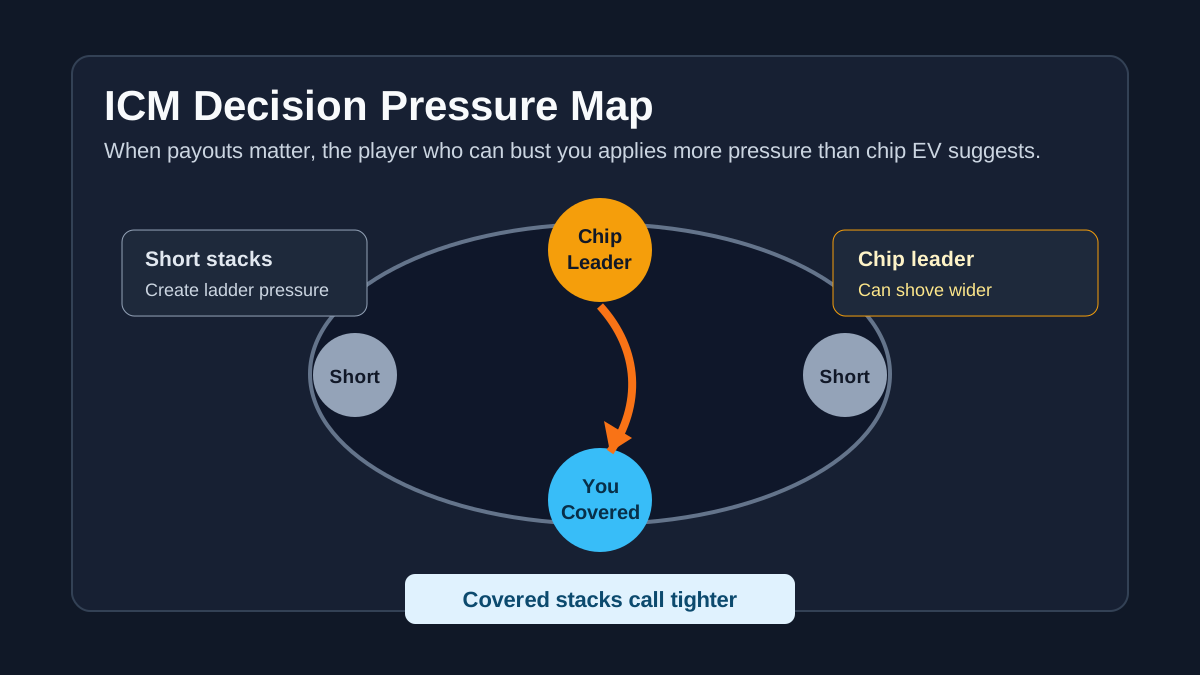
You are five-handed at a final table. Payouts jump significantly from fifth to fourth. The chip leader shoves from the small blind into your big blind. You are second in chips with A-9 offsuit. In a cash game or winner-take-all chip-EV model, A-9 can look far too strong to fold against a wide small-blind shove.
Under ICM, the answer can change. Calling and losing may drop you from second to out, while folding preserves pressure on the shorter stacks. The chip leader can often shove wider because they cover you. You must call tighter because your bustout cost is high.
That is the kind of spot worth spending a limited free ICM calculation on. The lesson is not "fold A-9 always." The lesson is that payout pressure changes thresholds, especially when you are covered by the only stack that can eliminate you.
Free Poker Tools for Hand Review
Hand review is where your study becomes personal. Equity and pot-odds tools teach math. ICM tools teach payout pressure. Hand-review tools show where you are actually leaking.
GTO Wizard's free account has limits, including one postflop spot per day, 10 practice hands per day, and 5 analyzed hands per month according to its subscription help page. Those limits are too small for bulk review, but they are useful if you choose spots carefully. Its Analyze Mode documentation describes uploading single hands, sessions, or databases, then reviewing hands sorted in a table with EV loss visible for actions.
PokerTracker 4 is not a permanent free product, but its official trial page lists a free 14-day trial. Its product page also describes post-game review features such as a replayer, ICM and equity calculators, LeakTracker, reports, graphs, and range visualization. That makes the trial useful if you plan it before installing.
Do not start a tracker trial on a week when you barely play. Start it when you already have a review plan:
- Import enough recent hands to create meaningful filters.
- Tag 20 uncertain hands from current sessions.
- Review your largest repeated leaks, not only your largest pots.
- Check basic stats such as VPIP, PFR, 3-bet, fold to steal, c-bet, and river call frequency.
- Export or write down the top three fixes before the trial ends.
If you use a limited solver analyzer, do not upload random hands. First, identify the key decision. Then spend the analysis credit on a hand that represents a pattern: repeated blind defense, over-calling rivers, c-betting bad boards, or missing thin value.
[INTERNAL: hand history review process]
How to Build a Weekly Study Routine With Free Poker Tools
A free tool stack works best when your week has a rhythm. Without structure, you will click around, run interesting matchups, and forget what you learned.
Use a four-part routine.
Monday: equity anchors. Pick five common matchups and write the approximate equity. Include at least one made hand versus draw, one dominated hand, one pair versus overcards, one range-versus-range spot, and one multiway spot.
Tuesday: pot odds. Review common bet sizes and calculate the required equity without looking. Then replay three hands where you faced a turn or river bet and ask whether your call cleared the threshold.
Wednesday: ICM. Run one tournament all-in spot. Record the stack setup, payout pressure, and the biggest surprise. Was the calling range tighter than you expected? Was the chip leader allowed to shove wider?
Thursday: hand review. Choose two tagged hands from your own sessions. Reconstruct ranges before looking at results. Identify the main node and write one adjustment.
Friday or weekend: practice and play. Take one fix into your next session. Do not try to fix everything. If your leak is loose big-blind calls, focus on that. If your leak is under-value-betting rivers, focus on that.
This loop turns free tools into a training system. Each tool produces an action, not just a number.
Mistakes to Avoid When Using Free Poker Tools
The first mistake is using tools during live play when the site or room does not allow it. Study tools belong off-table unless your poker site's rules explicitly permit a specific use. When in doubt, do the work after the session.
The second mistake is confusing raw equity with EV. A hand can have enough raw equity but still lose money because it realizes poorly out of position, faces future bets, pays rake, or has reverse implied odds. Equity is one input, not the whole answer.
The third mistake is ignoring ranges. If you only run exact hand versus exact hand matchups, you will train yourself to think about poker after showdown. In real hands, you rarely know villain's exact cards.
The fourth mistake is overvaluing solver output without understanding the node. If your bet size, stack depth, rake structure, multiway action, or player pool differs from the solved spot, treat the output as guidance rather than a script.
The fifth mistake is letting free limits dictate your study instead of your leaks. If you have only five analyzed hands per month, spend them on high-value patterns. A boring 12bb river mistake that happens every session can matter more than one dramatic cooler.
The Best Free Poker Tools Stack by Player Type
Cash-game beginners should start with equity and pot odds. Your biggest gains usually come from folding bad draws, value betting better, and understanding when top pair is not strong enough. Add hand review once you have enough online hands or live notes.
Online cash regulars should add tracker-based review. Even a trial can show whether your preflop frequencies and postflop patterns are far from winning baselines. Pair that with limited solver review for the spots that cost the most EV.
Tournament beginners should add ICM earlier. Push-fold and call-off mistakes near bubbles and final tables are expensive because they affect payout equity. Use one free ICM calculation per day on a real hand or realistic tournament setup.
Sit-and-go players should prioritize ICM and short-stack ranges. Small changes in calling thresholds can swing ROI because all-in decisions happen often and payouts are compressed.
Live players should use the same free tools, but with better note capture. Record stack sizes, position, bet sizes, and reads immediately after the hand. A free calculator cannot help if your notes are missing the pot size or effective stack.
[INTERNAL: poker tracking software setup]
Take Action Now With Free Poker Tools
The best Free Poker Tools are not the ones with the longest feature list. They are the ones you use consistently to answer real poker questions. Start with equity and pot odds, add one ICM spot if you play tournaments, and review your own hands with a strict process.
For your next study session, pick one hand you were unsure about. Calculate the pot odds, estimate or run the equity, decide whether ICM matters, and write one adjustment for the next time that spot appears. That is how Free Poker Tools become better decisions at the table.
Frequently Asked Questions
What are the best Free Poker Tools for beginners?
The best beginner stack is an equity calculator, a pot-odds calculator or chart, and a simple hand-review process. If you play tournaments, add a limited free ICM calculator. If you play online, consider a tracker trial only when you have enough hands ready to review.
Are free poker equity calculators accurate enough?
For basic hand-versus-hand and hand-versus-range checks, free equity calculators are accurate enough to build instincts. Paid tools may add range storage, advanced reports, solver integration, or workflow features, but the basic showdown math is still useful.
Can I use Free Poker Tools while playing online?
You should not assume that. Many poker sites restrict real-time assistance, HUDs, charts, solvers, or calculators during play. Use study tools away from the table unless the site rules clearly allow the exact tool and use case.
Is ICM study necessary for small-stakes tournaments?
Yes, if payouts matter. Even small-stakes tournaments have bubbles, pay jumps, and final-table pressure. You do not need advanced study immediately, but you should learn how calling ranges tighten when busting costs more than the chips you might gain.
Should I pay for poker software after using free tools?
Pay only when you know what problem the paid tool solves. If free tools already answer your current questions, keep using them. Upgrade when volume, hand history review, solver access, or tournament ICM work becomes a real bottleneck in your study.